Framer Framed in the Molenwijk district
It’s an unlikely plan. It’s brave. And it makes sense. At first glance, Framer Framed and Molenwijk are far apart from each other, in every sense of the word. Molenwijk is a prototypical ‘old new neighbourhood’. Framer Framed is a top-tier platform for the visual arts in the Netherlands. Molenwijk is located in a quiet corner of Amsterdam’s Noord district, near the A10 ring road. Framer Framed’s home is the Tolhuistuin, a venue in a trendy neighbourhood on the northern banks of the River IJ. Framer Framed has just been nominated for the Amsterdamprijs voor de Kunst, a renowned arts prize. In Molenwijk, a few forgotten sculptures dot the grassy areas between the housing blocks. Framer Framed has been providing a forum for discourse on transcultural art within Dutch art institutions, and is setting a positive example, since 2009. Molenwijk has been going through a process of reverse gentrification ever since it was established in 1968: while the first residents of the neighbourhood were rigorously screened for type of work, income, denomination and union membership, more and more lower-income families moved in as the years progressed. The aim of Framer Framed is collective curation. In Molenwijk, many people have forgotten what it means to greet each other in the corridors.
But still.
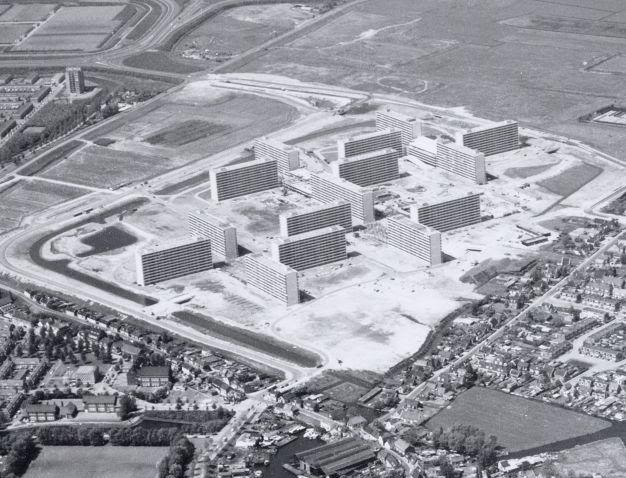
The Molenwijk neighborhood right before its completion in 1968
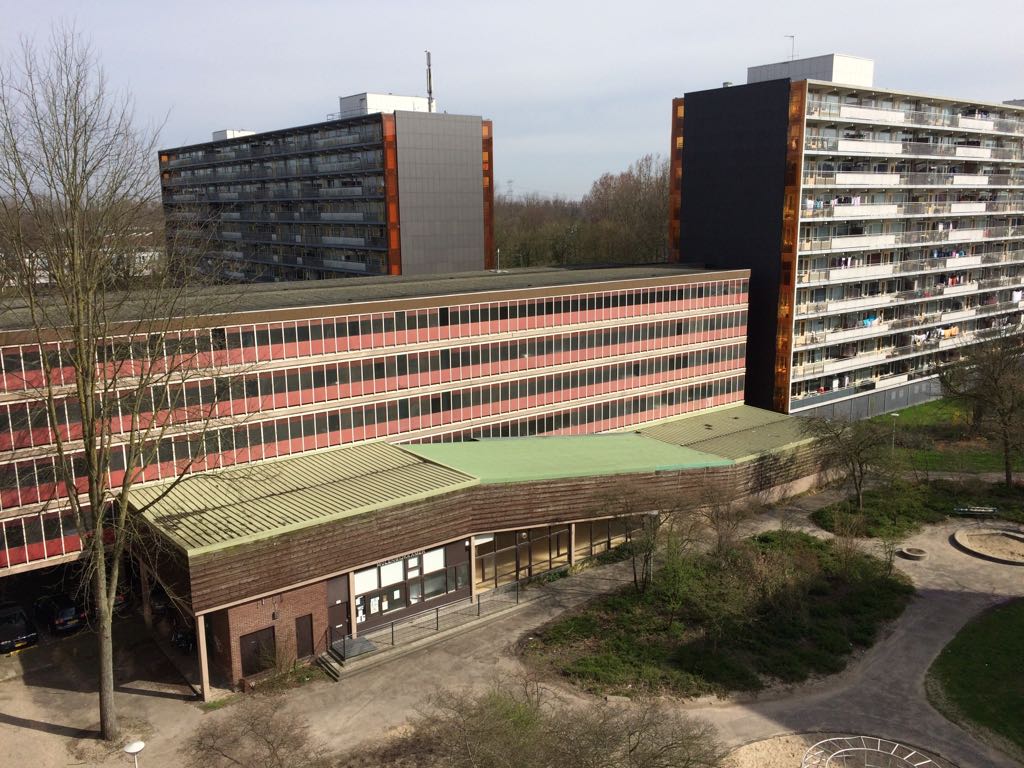
Seen from a bird’s eye perspective, from a helicopter or a drone, Molenwijk is a jewel of modernist architecture amidst the green. The buildings are arranged crosswise, each wing surrounded by trees, with footpaths and cycle lanes winding through among them. The shopping centre, with its library and a renewed Zeeman branch, has recently been renovated and now feels both urban and village-like. This is a neighbourhood with a sense of ambition – and even if that ambition is somewhat threadbare, it is still palpable. Tuindorp Oostzaan, one of Amsterdam’s so called ‘garden villages’, is nearby, as is the NDSM – a former shipyard-turned-cultural hub – and the ferry to central Amsterdam. Yet Molenwijk is a world of its own. Its residents are young and old citizens of the world: Gerrit and Shaniqua, Mihai and Annie. It’s just that due to planning errors and cuts, there’s barely a public space where all these citizens of the world can meet. Except for that shopping centre. And the Molenwijkkamer (Molenwijk Room), a community hub that offers a range of activities in a comfortably furnished space underneath the Paltrok car park. From sewing lessons to ‘soup-and-language’ meetups and from cooking clubs to community dinners, there’s something on every day.
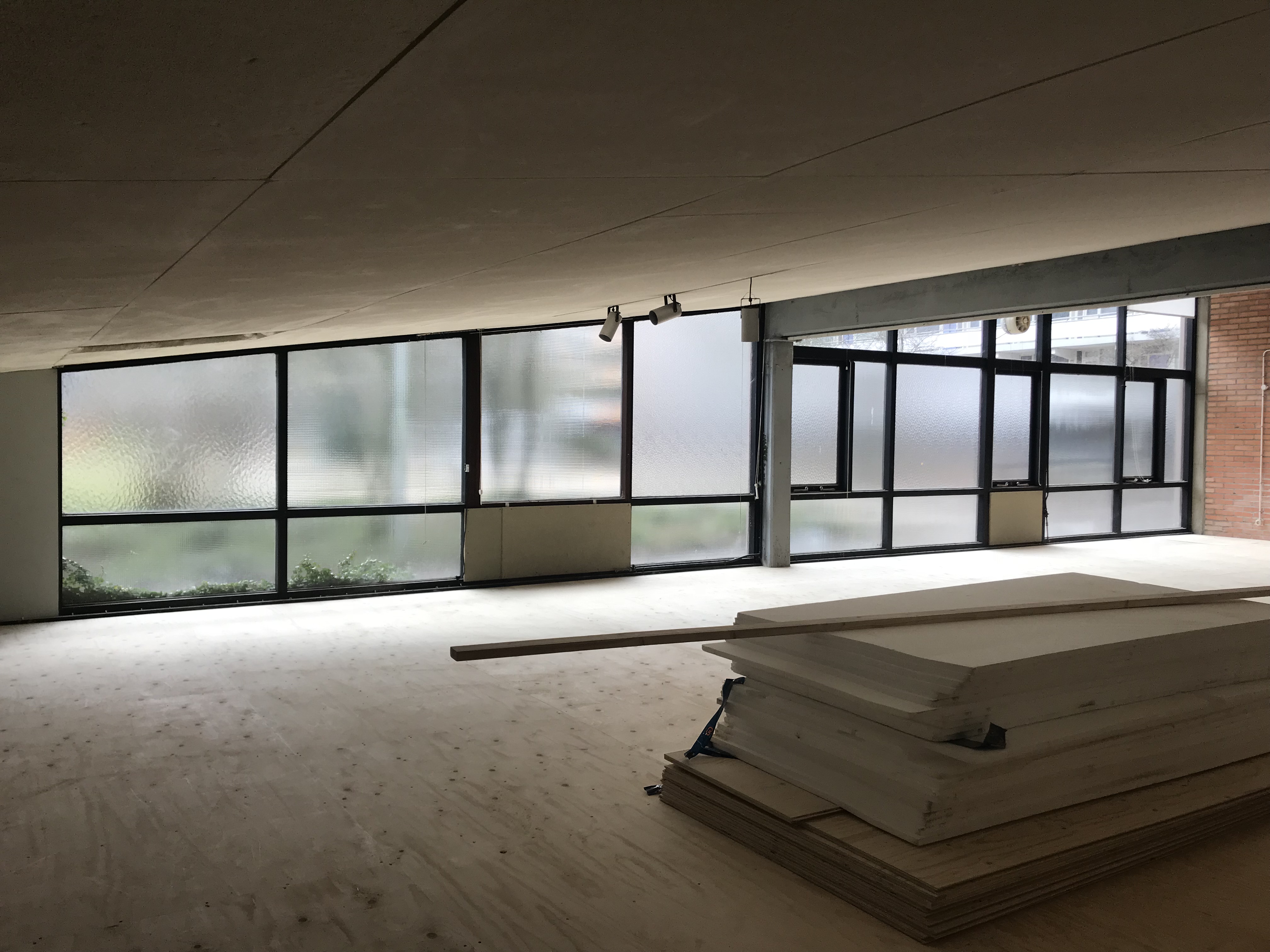
And now, Framer Framed is going to open an art space in the light, spacious studio next door. For a long time, this was the studio of sculptor Hanna Mobach. Now De Alliantie, the housing corporation that manages the space, has made it available to Framer Framed. They’re moving in in September 2018. And it goes without saying that their first exhibition this year – the anniversary year of Molenwijk – is dedicated to the neighbourhood itself: 50 Years’ of Molenwijk. For the organisers Cas Bool, Josien Pieterse and Minouche Wardenaar, this was a logical next step.
When Bool and Pieterse opened Framer Framed at the Tolhuistuin in 2014, they assumed they’d arrive in the cultural periphery. Which was exactly what they were aiming for: be somewhere between the people that are used to interacting with art, and those who aren’t. But soon, Amsterdam’s northern bank of the IJ became such a popular area that they were attracting the same types of audiences as in the city centre – while they had actually tried to remove themselves, their artists and their visitors from the dominant art-circuit bubble. So now it’s an appealing idea to start up in Molenwijk. It’s a canvas. There are personalities. There are wide, open views. There is a surface and there are deep layers. But it’s not yet an artwork. The composition is not yet finished. You need a curator’s eye to bring all these elements together. Or rather, the eye of several curators. That of Framer Framed itself, that of visiting artists – and, of course, that of the Molenwijkers.
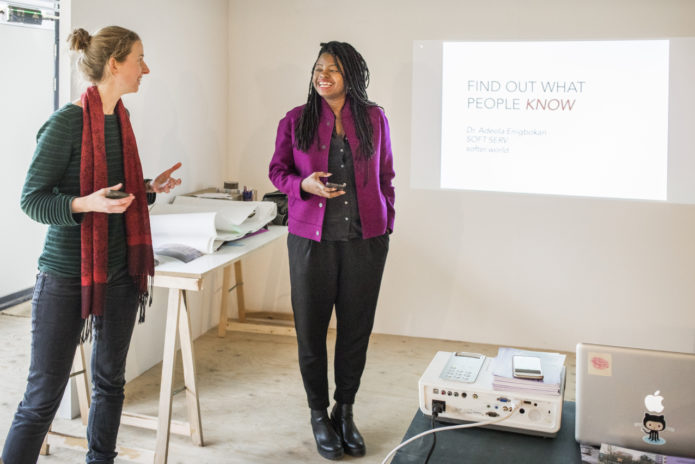
Framer Framed has not rushed into this. In preparation for the project, they have asked two classes of students to conduct research into how Molenwijkers experience their neighbourhood and what type of art they would like to see there. The previous winter, master’s students of sociology led by Adeola Anigbokan traversed the neighbourhood. In May and June, students of a course on Public and Media at the Amsterdam University of the Arts’ Reinwardt Academy did the same for their module on participation, taught by Marjelle van Hoorn. They all walked around among the beautiful and the dilapidated tower blocks. They hung out at the shopping centre, talked to people in their homes and in the park, met children as well as those residents who’ve been there from the very start, and interviewed new and old employees of the city district and of housing corporations.
The young sociologists arrive at a clear recommendation: if you want to start something new here – something like Framer Framed – you need to involve absolutely everyone. Because behind those doors and between those trees there are so many different voices; voices that are having a much harder time understanding each other than the residents of the old days. This neighbourhood contains such multitudes of diverse and disconnected stories – there is incredible potential in bringing them together. In doing so, you must pay particular attention to the boys and girls that are growing up here. There is far too little for the boys to do. And the girls are much too often invisible in the public realm.
The students of the Reinwardt Academy, which teaches its students new ways of looking at heritage and museology, were literal in their approach to their module on Participation. It was them who were participating. They were supposed to research how best to involve the Molenwijkers in the creation of the new art space, but they ended up getting lesson upon lesson in all things Molenwijk. They were conscious of the fact that they were nothing more than visitors. They encountered a neighbourhood that, at first glance, doesn’t have much to offer to outsiders. A fortress that you can’t enter unless you know the right codes. But people are attached to it. They feel at home here. They complain, and they are nostalgic about how things used to be – both privileges of the locals. Visitors don’t have permission for complaints and nostalgia. So the students were shy to begin with. But soon, they were made to feel at ease: by the beer drinker on the park bench, the retired administrator, the children at the school playground, the students that live in Molenwijk in exchange for community service.

Reinwardt Academie students share their experiences
And now, Framer Framed is facing a choice. How will they make all these different stories sound? How will they compose an artwork from all these pre-existing elements? Will it reflect reality or transcend it? It’s not an easy task, this. Because Molenwijk is a place that’s very slowly getting more and more litter-strewn, sighs an old resident in one of the student interviews. In Molenwijk, the drama moves slowly and the moments of warmth might be rare, but they’re never far away.
Framer Framed chooses between zooming in on the faintest traces of decay or beauty, and magnifying the lives of individuals on a square inch into universal dimensions. Cas, Josien, Minouche and the others are planning to establish an artistic practice that reflects the world in which they want to live: a world of collective responsibility, where thoughtfulness is more important than money, where there is a focus on histories that couldn’t be told before, where there is an aspiration to offer a space to each voice that deserves to be heard. Within the Molenwijk context, this means: an art space for everyone, created by people that don’t feature in each other’s stories but who still work in partnership; a space where the carpenter and the artist and the visitor take each other seriously and are willing to swap roles with each other. This is meant to become the space of a community, in a place that’s in search of its community spirit. Molenwijk is a world of its own. A world that sometimes forgets that it’s actually quite something. Now it’s being given a space where it can show itself.
Text: Chris Keulemans
30 September 2018

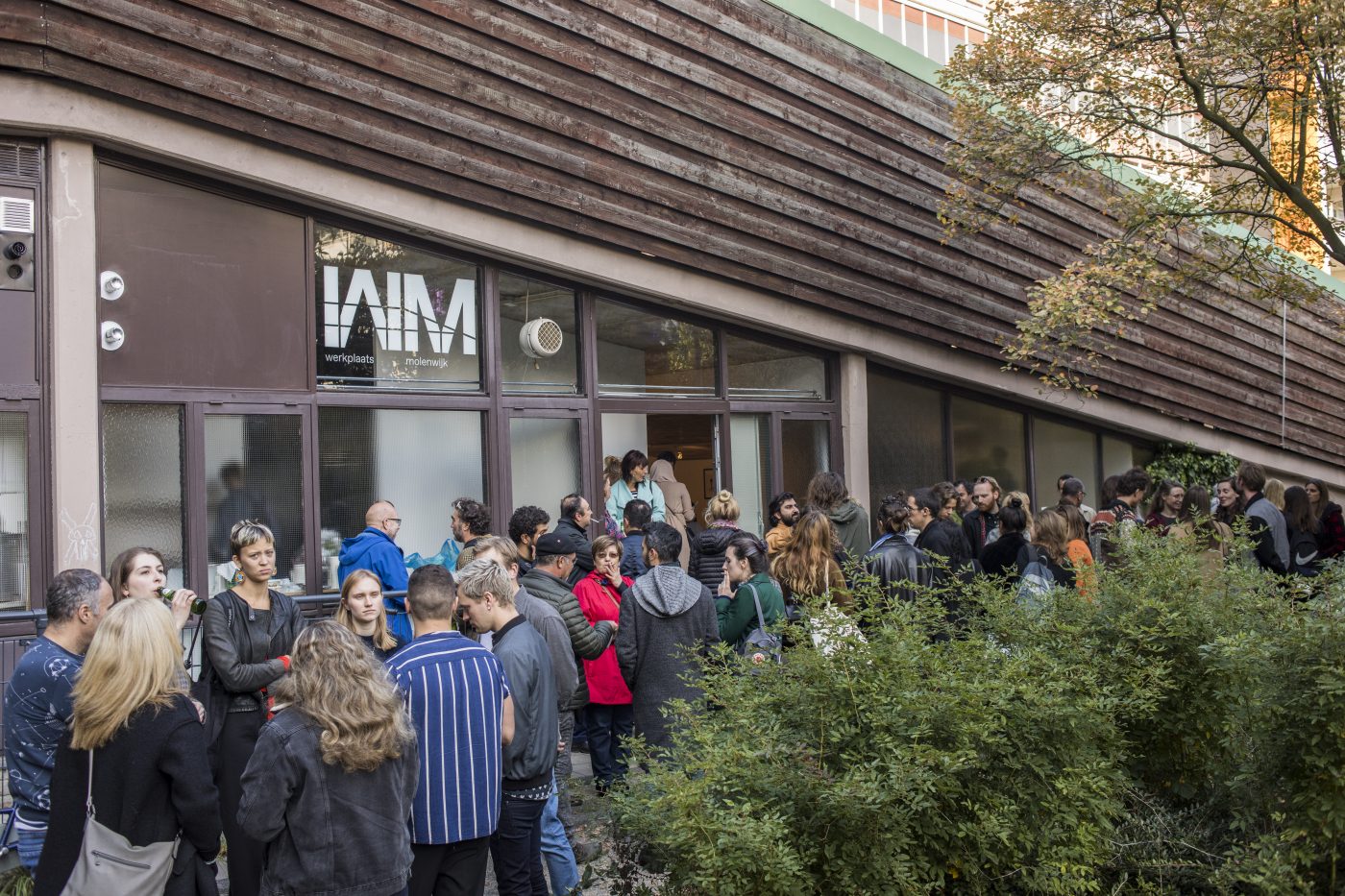
Opening of Werkplaats Molenwijk, 30 September 2018. Photo: Marlise Steeman
Amsterdam Noord / Community & Learning / Molenwijk /
Agenda
Werkplaats Molenwijk: A 5-Year Celebration!
A festive program including a parade, a book launch, a walking tour, workshops and more!
Opening: project space Werkplaats Molenwijk
On 30 September Framer Framed heads deeper into ‘the North’, with the opening of a new, second project space: Werkplaats Molenwijk (Workspace Molenwijk)!
Network

Adeola Enigbokan
Artist and urbanist
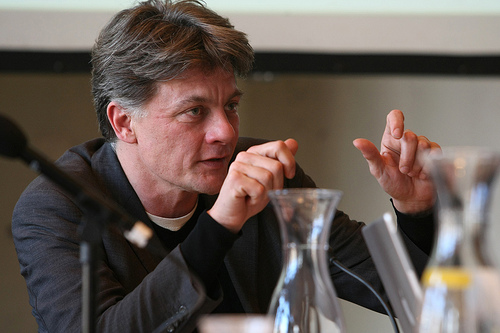
Chris Keulemans
Author
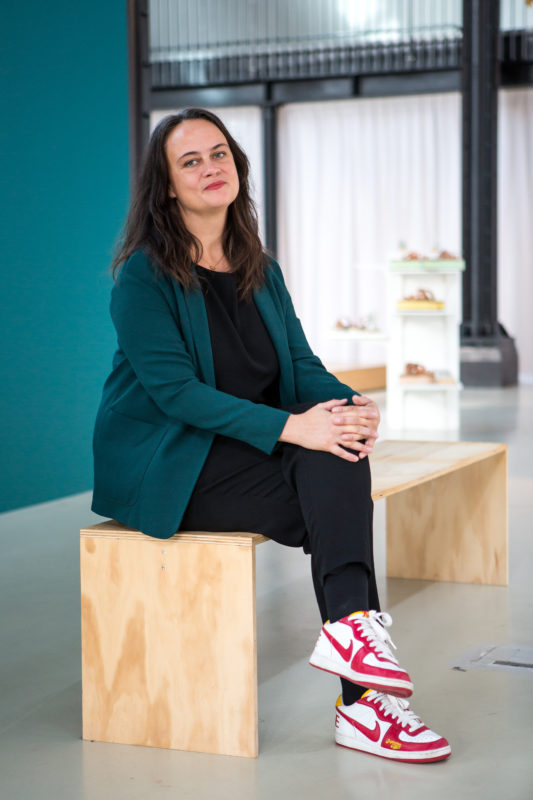
Josien Pieterse
Director of Framer Framed
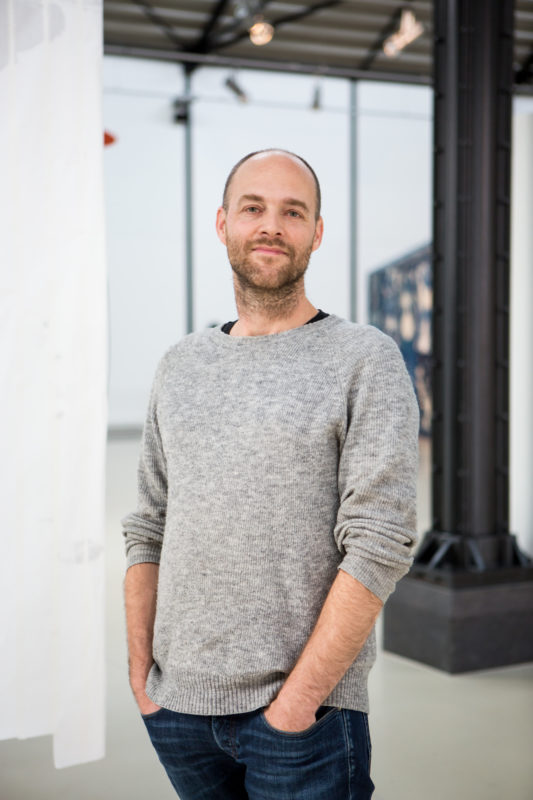
Cas Bool
Director of Framer Framed
Magazine
Molenwijk / Amsterdam Noord / Art in Public Space / Residencies /
Molenwijk / Community & Learning / Residencies /
Framer Framed at Werkplaats Molenwijk: From Amulet to Artefact
Amsterdam Noord / Community & Learning / Molenwijk /
Neighborhood research by architect Laura Alvarez at Werkplaats Molenwijk
Community & Learning / Amsterdam Noord / Molenwijk /
Perspectives on Public Space met Cas Bool & Adeola Enigbokan
Art in Public Space / Amsterdam Noord / Gentrification / Turkey /