16 Jan 2026
17:00 - 19:30
Finissage: Srefidensi – Suriname Vrij!
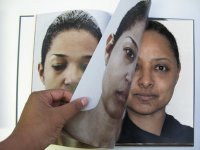
Join the finissage of the exhibition Srefidensi – Suriname Vrij! Symbols of 50 Years of Surinamese Independence, during which artist Sara Blokland, together with Sherlien Sanches and curator Leana Boven, reflects on several well-known and lesser-known stories of colonial history leading up to Suriname’s independence in 1975. The conversation is followed by a sonic lecture and talk with musicologist mo w/rights.
Please note: due to the winter conditions, the finissage has been postponed until Friday 16 January.
Programme
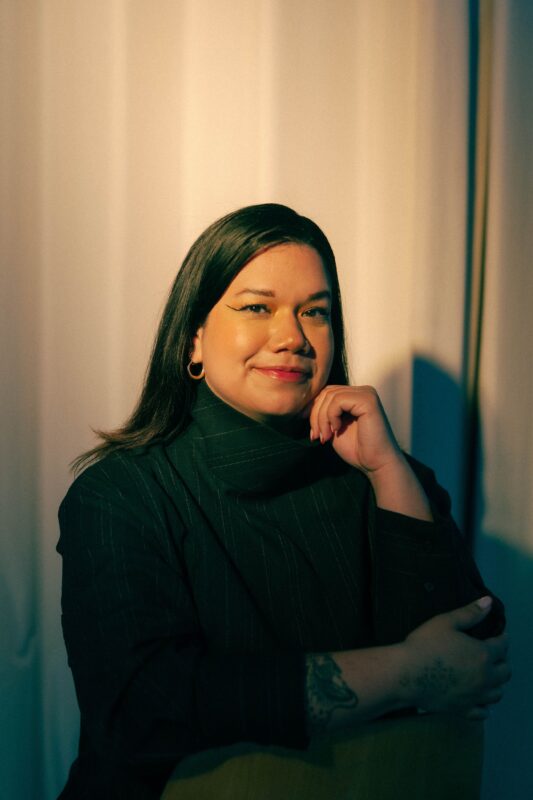
17:00 – 18:00 Conversation with Sara Blokland and Sherlien Sanches, moderated by curator and researcher Leana Boven
The conversation opens with a presentation by Blokland on Srefidensi, a research initiative by Blokland and FOTODOK. It focuses on the 1976 Indigenous protest march and its historical context, including rarely seen archival photographs by artist Cary Markerink. In December 1976, fifty Indigenous women and men began a four-day, 150-kilometre march from Albina to Paramaribo, organised by KANO (a coalition of Kalina and Lokono communities), to demand recognition of land rights they had lived on for centuries – rights that remain unresolved today. Building from this history, the conversation reflects on the Indigenous-led protests not as distant archival moments, but lived histories with ongoing relevance. In dialogue with Sherlien Sanches, participants foreground Indigenous perspectives, experiences and contemporary struggles around land, language and culture, centring Indigenous presence and voices within Suriname’s past and present.
18:15 – 19:00 Sonic lecture by mo w/rights on Surinamese resistance music
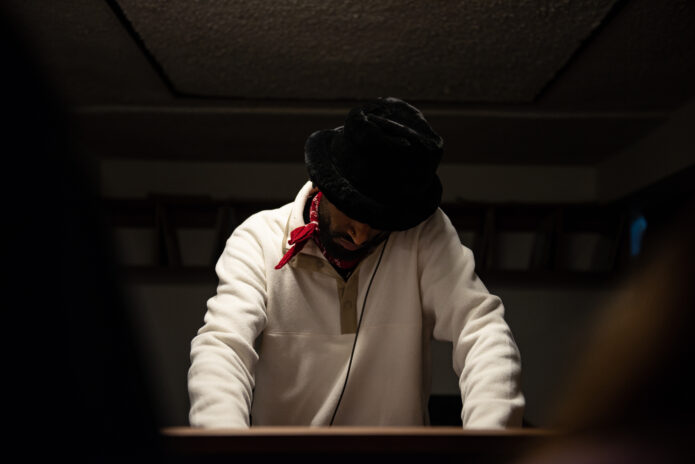
Musicologist mo w/rights (Maurice Dharampal) explores the intersection between (new) media, music and liberation. In collaboration with the Black Archives, he dives into the history of Surinamese socialist organisation LOSON and the album Stré Pokoe, which contains fourteen revolutionary battle songs that portray a progressive world view and international solidarity against colonialism, racism and fascism. Using sonic lecture as a method, he explores various new ways of disseminating the music, the story and the ideological discipline.
Register for the finissage here.
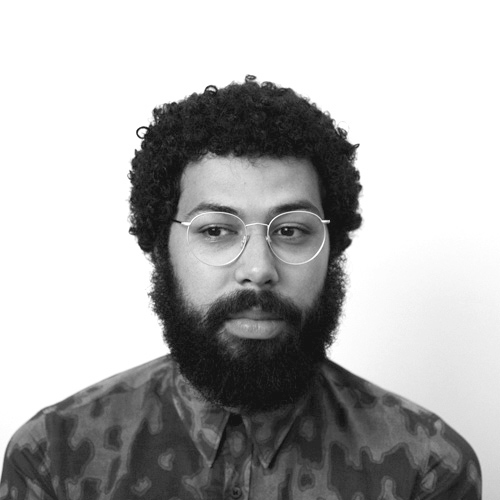
Srefidensi – Suriname Vrij! Symbols of 50 Years of Surinamese Independence features work by artists Sara Blokland & Jaya Pelupessy and Xavier Robles de Medina, curated by Vincent van Velsen. Fifty years ago, on 25 November 1975, Suriname gained independence. The year 1667 marked the beginning of 308 years of colonial rule, during which the Caribbean country on the South American continent came under Dutch rule. The exhibition brings together two projects that focus on prominent symbols of Surinamese Independence: the national flag and the creation of the statue of Surinamese Prime Minister Johan Adolf Pengel.
Sara Blokland uses photography as a means to reflect on both well-known and lesser-known stories from history that led to Suriname’s independence in 1975. Together with writers, artists and researchers, she analyses articles, stories and photographs that depict the resistance and emancipation of the Surinamese people. An important symbol during that period was the Surinamese flag, which was raised in 1975 not only in Suriname, but also in the Bijlmer neighbourhood of Amsterdam. On 24 November, the day before the official declaration of independence, the flag was already flying in front of the sports hall in Bijlmermeer: in the freezing cold, but to the loud cheers of many. Due to the time difference, the flag could be seen in the Netherlands hours earlier than in Suriname. Using photographs and stories, Blokland, in collaboration with Jaya Pelupessy, researched the history of the Surinamese flag and its meanings, telling the story of the flag as a metaphor, symbol and subject of political discussion and means of protest.
The flag in Paramaribo was raised on the spot where, for 52 years, the larger-than-life granite statue of a young Queen Wilhelmina had stood. The statue was removed a few days before the independence celebrations. This was done at night, so as not to offend the many Surinamese supporters of the House of Orange-Nassau. It was then dragged to the camp of the Dutch troops in Paramaribo, only to be given a new place a year later on the Waterfront near Fort Zeelandia, where it still stands today. The statue of Wilhelmina, the embodiment of colonial power, had to make way for the new symbol of the independent nation state of Suriname.
A year earlier, in 1974, another statue had been erected on what was then Oranjeplein, later renamed Onafhankelijkheidsplein: a statue of Johan Adolf Pengel (1916-1970), a leading figure of Surinamese independence. Together with the Hindustani political leader Jagernath Lachmon, he was the founder of the Verbroederingspolitiek (Fraternisation Policy), which was to form the basis for the joint future of all ethnic groups within a single independent Suriname.
The statue was created by Stuart Robles de Medina (1930-2006), who is considered one of the most important modern Surinamese sculptors. His grandson, Xavier Robles de Medina, uses documentation of the process, recorded in a family album, to provide insight into the artistic creative process, but also into the social climate during the politically turbulent period that led to Suriname’s independence in 1975. The publication Pengel (2024), created by Xavier, is a replica of the family album, in which the creation of the sculpture is accurately documented, supplemented with interviews and conversations with family members involved. The artist’s book describes extensive research into the work of Stuart Robles de Medina and the historical period in which he worked on this bronze sculpture of Surinamese Prime Minister Johan Adolf Pengel in the years leading up to Suriname’s independence.
Fifty years after the first Surinamese flag was raised and the statue of Wilhelmina was removed, it is vital to reflect on this pivotal moment in history. The research of Robles de Medina, Blokland and Pelupessy has been brought together by curator Vincent van Velsen in the form of objects, stories and documentation that question and illustrate the symbolism surrounding state formation and the political process of Surinamese independence.
Participating artists
Sara Blokland and
Jaya Pelupessy
Xavier Robles de Medina
Curator
Vincent van Velsen
Graphic design
Kazeze
Location
Framer Framed
Oranje-Vrijstaatkade 71
1093 KS, Amsterdam
Finissage
Friday 16 January 2026 at 17:00. Register here.
Opening times
21 November 2025 – 11 January 2026
Tuesday to Sunday, 12:00 – 18:00
Free entry, pay what you can.
Framer Framed is supported by the Ministry of Education, Culture and Science; Amsterdam Fund for the Arts; Municipality of Amsterdam; and VriendenLoterij Fonds.
Photography / Colonial history / Art and Activism / Suriname /
Network

Sherlien Sanches
Chair of the International Indigenous Knowledge Centre and Advisor International Heritage Collaboration
Leana Boven
mo w/rights
Xavier Robles de Medina
Artist
Vincent van Velsen
Art critic and curator