
On the Nature of Botanical Gardens: Decolonial Perspectives - by Evie Evans
Botanical gardens are living museums, archives of planetary transformations and connections. The colonial history of botanical gardens, though often acknowledged, has not been as vehemently tackled as that of museums. While contemporary art and artistic practice have increasingly become an access point to think through decolonial praxis, decolonising botanical gardens still feels like a lifetime away. The aforementioned exhibition exemplifies decolonial thinking by heavily embedding movement, layered histories, and alternative perspectives in its methodologies and artworks.
Text by: Evie Evans
Museums, botanical gardens, and colonial history
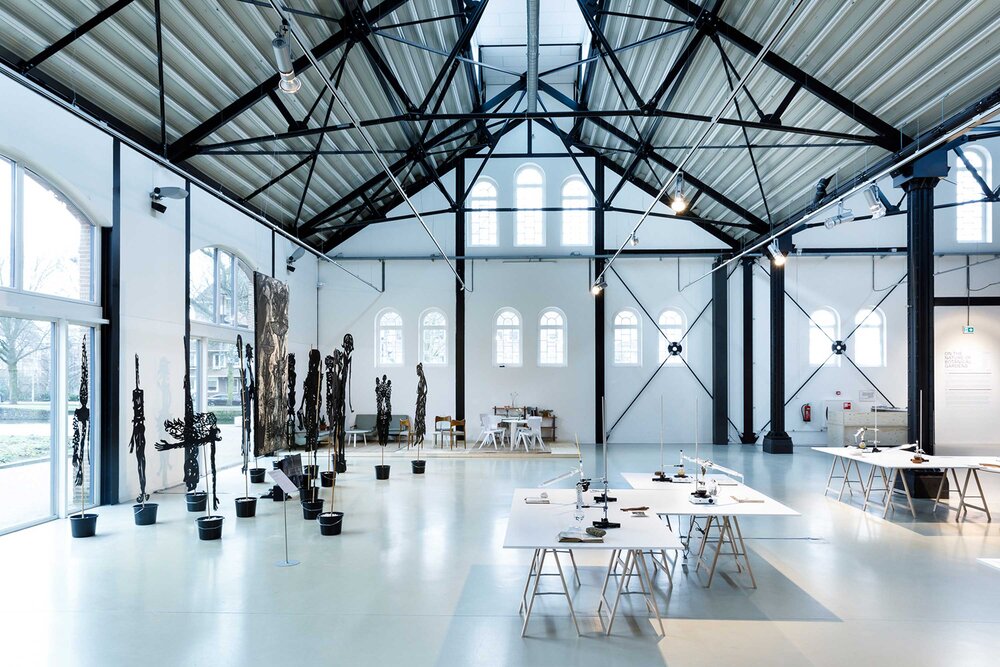
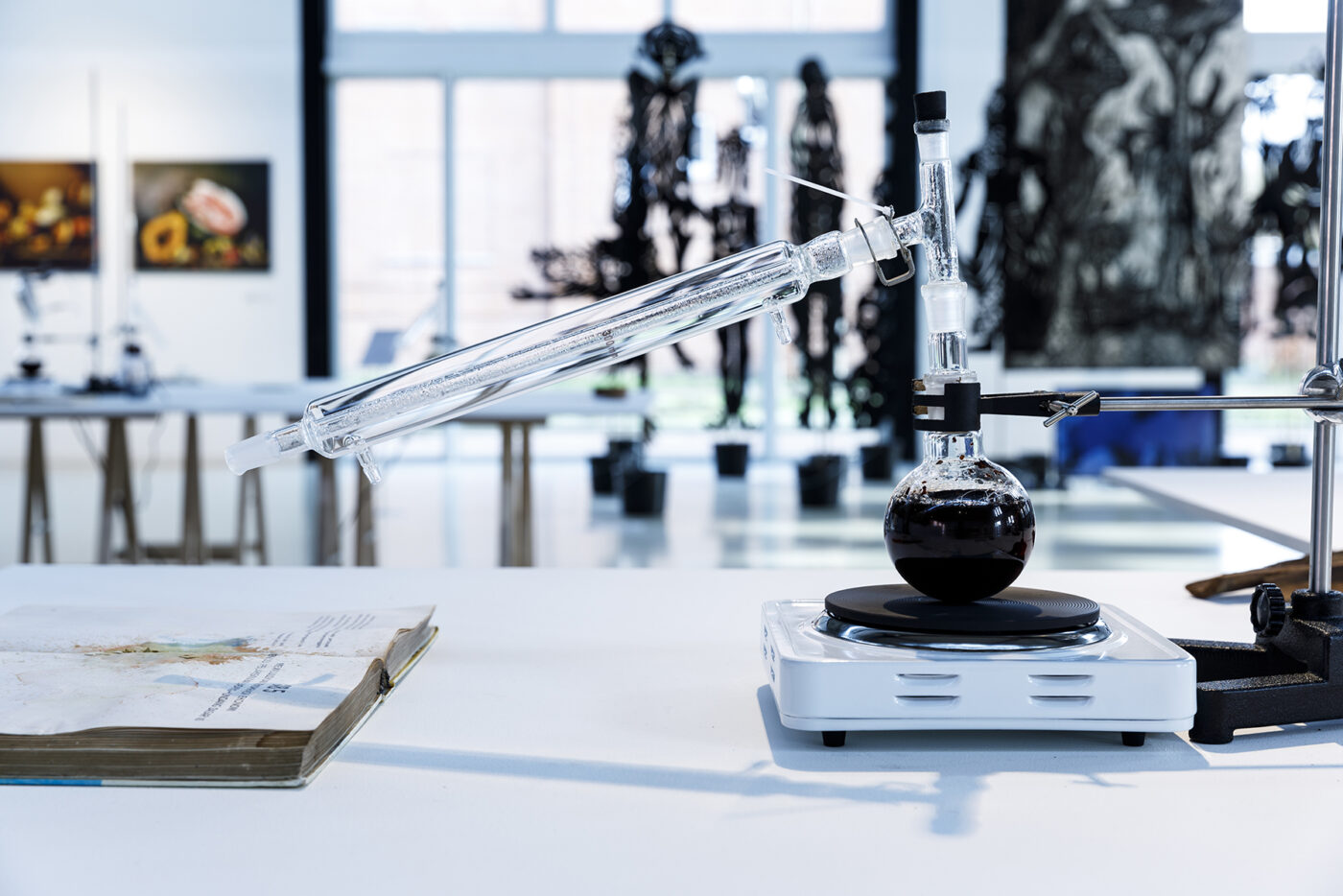
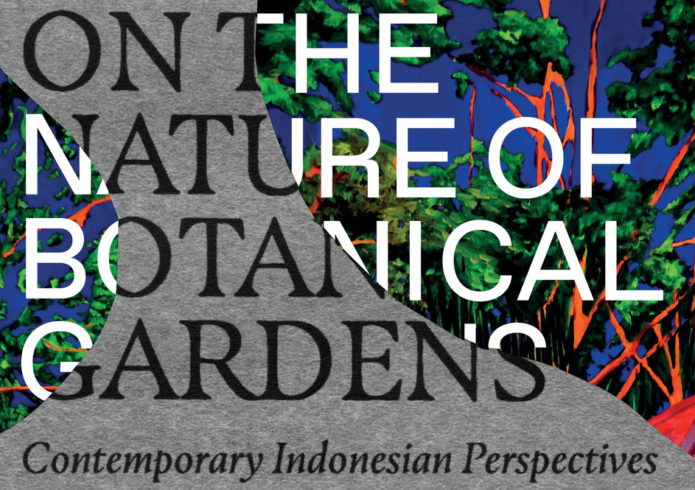
At the same time in which the modern museum was being born, botanical gardens were being established as scientific institutions producing and disseminating knowledge through global networks.1 Modern botany shaped a particular worldview, one of taxonomy and extraction. These processes of collection and categorisation functioned to control and fed into greater socio-political motivations of imperial expansion.2 Whilst today our museums are often subject to decolonial critique, botanical gardens escape the same scrutiny despite their comparable colonial origins. What would it mean to consider historical knowledge production through the realm of plant life? How would that change our understanding of power in relation to the natural world? These are two of the many questions that arose during the research of On the Nature of Botanical Gardens (2020) [Fig. 1]. Framer Framed has been no stranger to calling for the decolonisation of museums, having organised many panel discussions in ethnographic museums in the Netherlands since 2009.3 As institutions that shape our understanding of the world, it is vital to continually question museum practices of collection and exhibition. This is the starting point of my own research, activated by the 2020 exhibition On the Nature of Botanical Gardens, conceived and produced by Framer Framed and curated by Sadiah Boonstra.
With this interest in critical museology, Framer Framed’s co-founders Josien Pieterse and Cas Bool turned their attention to botanical heritage, a path that may not be obvious but leads us to new ways of thinking about the presentation and curation of natural heritage surrounding us. The botanical garden in particular is defined by its collection and its nature as a public institution – much like a museum. The garden, by its very curation, becomes a space of representation, signalling other meanings. Additionally, the botanical garden undergoes a system of ‘musealisation’ 4 in which objects – or rather living plants – are subjected to continual processes of collection, curation, and presentation which remove them from time, or any other cultural or historical entanglements. This is a key concept in museology, and it cannot be separated from modern Western notions of rationality, which are themselves inextricable from colonial history. In the same way as objects in a museum exhibition, plants form a new narrative for visitors. This “exhibition complex”, a term coined by Tony Bennett,5 defines the power and influence museums and botanical gardens have. Analysing botanical heritage in connection to museums offers striking parallels and differences that open up a wealth of possibilities for conversation.
After two years of internal research, Framer Framed invited curator and historian Sadiah Boonstra – who was already working on decolonising heritage – to put an exhibition plan into action. Trained as an historian, Boonstra completed her PhD from Vrije Universiteit Amsterdam on the cultural heritage of wayang performance in (post) colonial Indonesia. Her work at various institutions – the Indonesian Heritage Agency, National Gallery Singapore, and Wereldmuseum Amsterdam (formerly Tropenmuseum), to name a few – gave her the expertise to navigate museum and exhibition spaces in relation to art and cultural heritage. She researched contemporary Indonesian artists who were working with precolonial or Indigenous knowledge, making connections with decolonial practices.
So far, I have mostly mentioned decolonial thinking, rather than the act of decolonisation itself. In practical terms, I am greatly influenced by feminist theorist, Françoise Verges’ ground-breaking ideas of decolonising the museum in her 2024 book A Programme of Absolute Disorder.6 Epistemologically, I turn to Rolando Vázquez, Walter Mignolo and Catherine Walsh and, in turn again, to Aníbal Quijano – the teacher of their school of thought. These decolonial scholars operate with the joint concept of coloniality/modernity and specifically, decoloniality instead of decolonisation. Quijano defined formations of the colonial project as “the colonial matrix of power”, understood as infrastructures and interstate relations of political and economic power which is useful to consider in the history of botany and science.
When tracking the development of the Wereldmuseum Amsterdam, former curator Mirjam Shatanawi, explains that the first colonial museums in the Netherlands were for the promotion of colonial industry and production, the displays reflecting “the entitlement of European collectors”.8 Natural materials were the highlight for their economic returns: wood, agricultural produce, minerals, fibres, resins, fruits, and foods. Art and culture came afterwards. If we are to think seriously about decolonisation, especially of museums, we must include actions and perspectives that include botanical gardens and the natural world. The symposium Botanical Worlds: Plants and Seeds in Social Context, organised by the International Institute for Asian Studies at the Hortus Botanicus Leiden in October 2025, was a precious moment to raise the connection between knowledge, power, and nature.
Kebun Raya/Kebun Saya
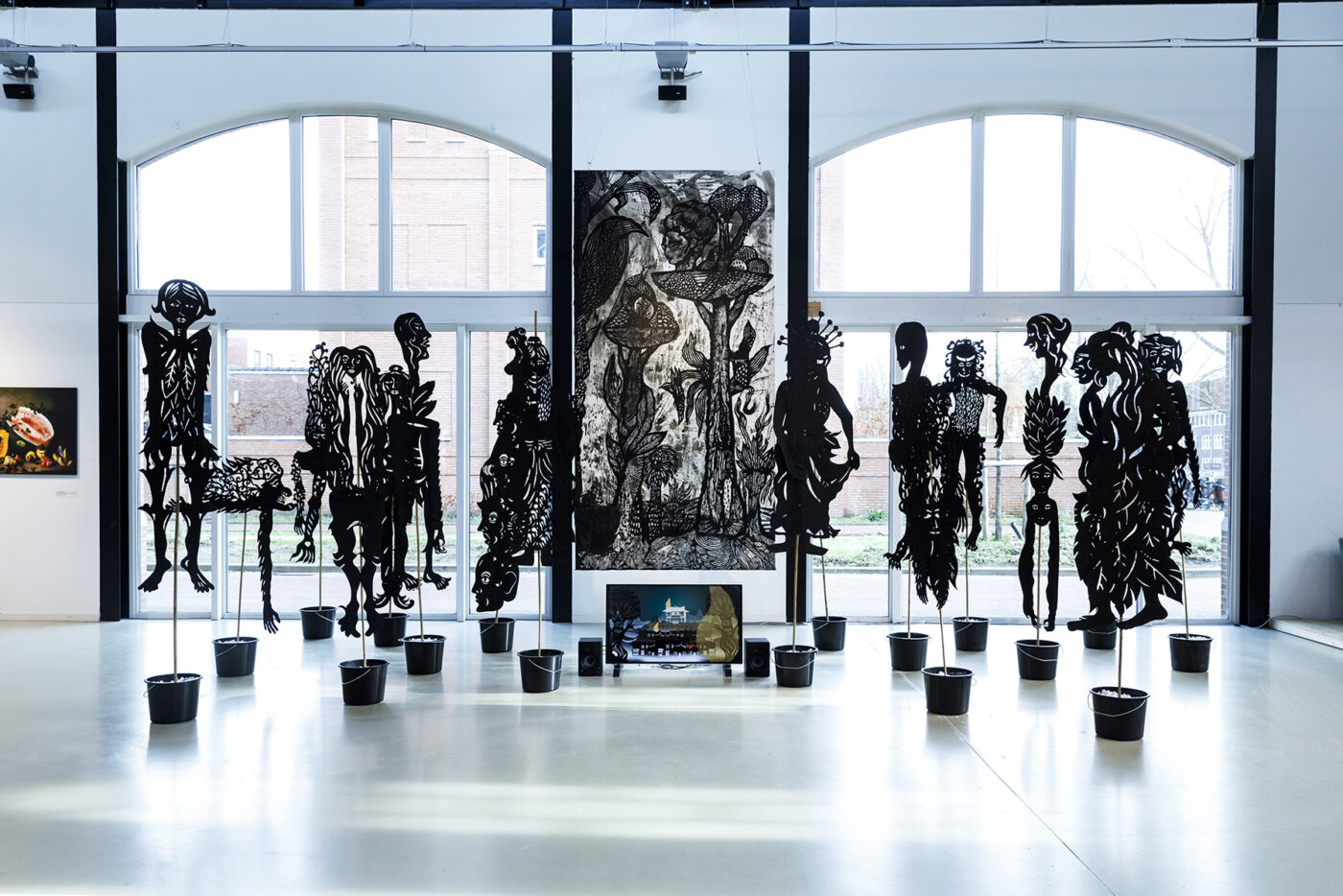
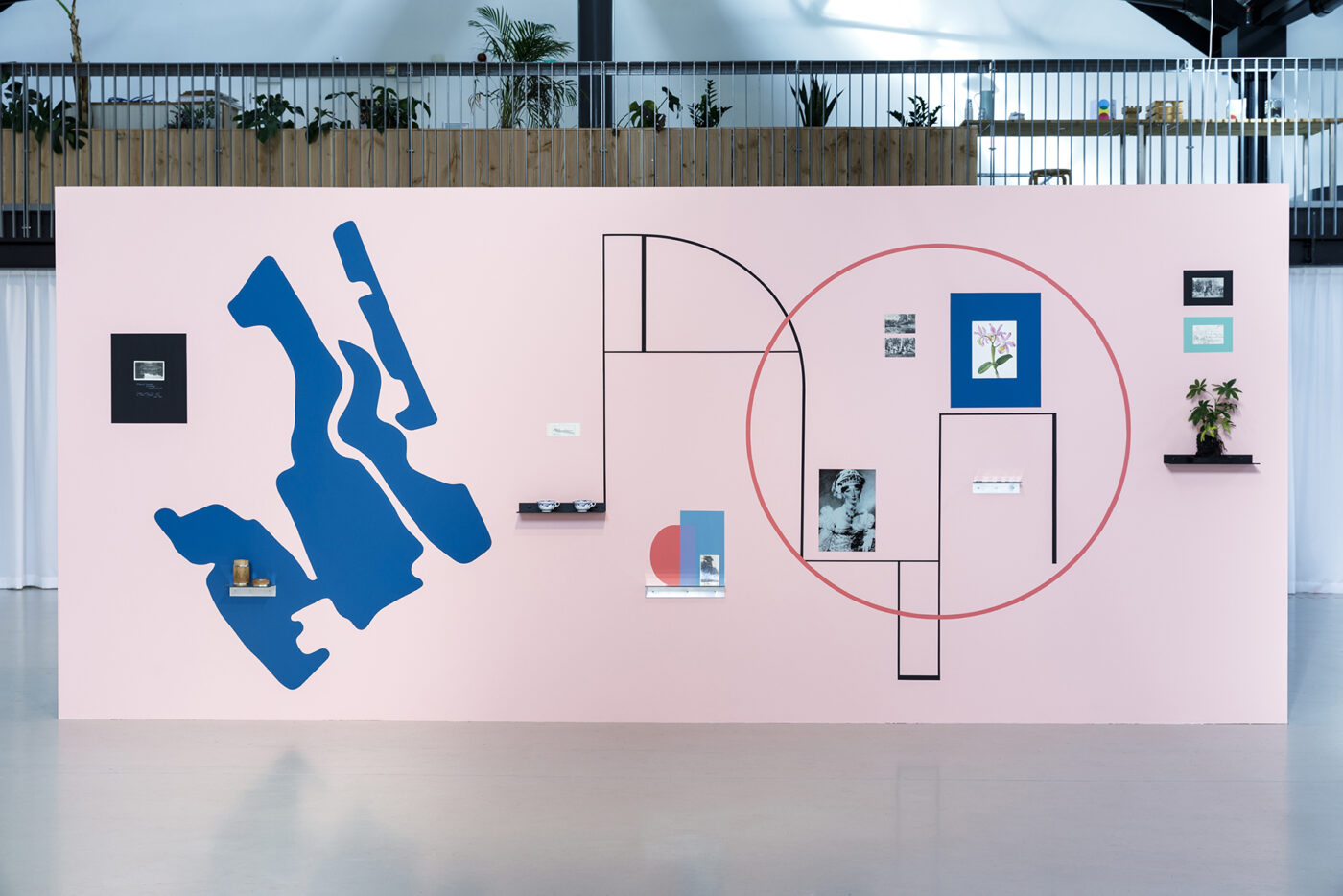
If you were to enter Framer Framed at the beginning of 2020, following the pandemic restrictions, you would be greeted by a long pink wall within the exhibition space. Artist Sinta Tantra’s site-specific mural Kebun Raya/Kebun Saya (2020) is what she defines as an ‘assemblage’, an installation combining art and objects and subjectivity [Fig. 2]. Her work is described as a space where “nature becomes art, art becomes artifice, and artifice becomes narrative – categorised and contained, constructed and real”.9 The display mimics that of a museum, a sort of cabinet of curiosities that highlights a bridge between nature and culture. The title can be translated as Botanical Garden/My Garden, as Tantra stakes her own claim over the institution and its history. She weaves together the blue marks inspired by the blueprints of the Bogor Botanical Gardens and the rigid geometric shapes which denote the structure of a traditional English garden.
The landscape morphs into an abstracted garden which, for me, also brings to mind a the structure of a plantation, an idea that is rapidly taking shape as a critical methodology. The ‘plantationocene’ is a mode of analysis, in opposition to the anthropocene, to rethink the entanglements of capitalism, colonialism, and the current climate crises – across multiple temporalities and localities. According to Barua et al., the plantationocene is a “duration. There is a perenniality to plantations: they tend to have a material obduracy that is difficult to undo”.10 The Bogor Botanical Garden was not merely for leisure or recreation. It was a ground for scientific experimentation, a way point to grow species between the metropole and its colonies. It was primed for profit as well as knowledge. Tantra’s garden is formed of objects that aim to encompass these different facets of the botanical garden, mediating its epistemological persistence.
Commissioned by Framer Framed, Kebun Raya/Kebun Saya is one of a few artworks in the exhibition that featured living plants. On the right of the mural stands a green plume, a plant whose tendril roots cling to a lump of volcanic soil brought from Indonesia by the artist herself. Ripped from its living context, its presentation – growing in an exhibition space in Amsterdam – reproduces the colonial logic of display. Tantra also included various collected objects: colonial photographs of the botanical garden, tourist postcards of the garden, Javanese tea, teacups, and a botanical map of Java. The (living) objects have been musealised and frozen in time. However, in an art space, Tantra draws our attention to the ongoing process of musealisation and to the politics of time. Colonialism articulates the past as archaic and the present as real.11 The past and present of Kebun Raya/ Kebun Saya exist at the same time, complicating the traditionally infinite time of museum presentation. In addition, the work creates new syntagmic relations, emphasising the relationality of decolonial praxis and formulating a new narrative of the Bogor Botanical Gardens.
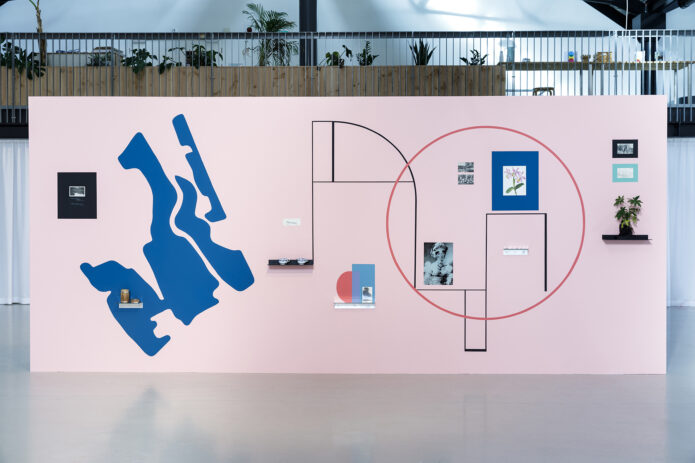
[Fig 2.] Sinta Tantra, Kebun Raya / Kebun Saya (2020). Photo: Eva Broekema
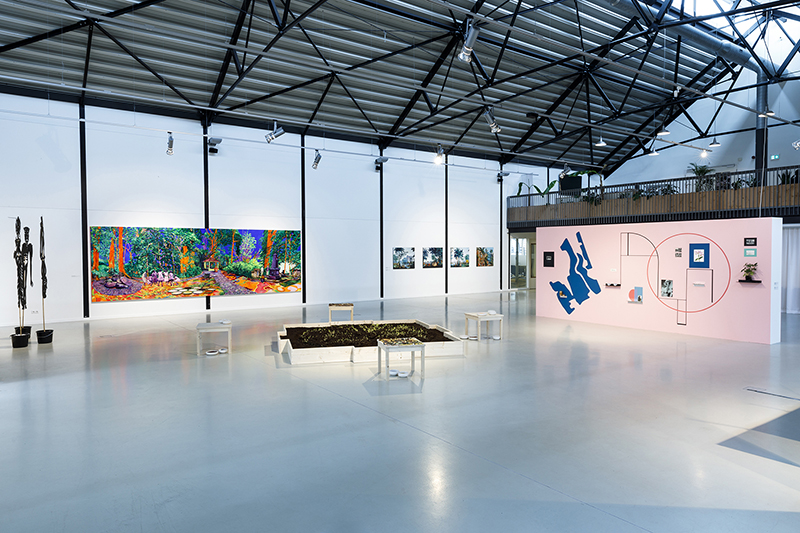
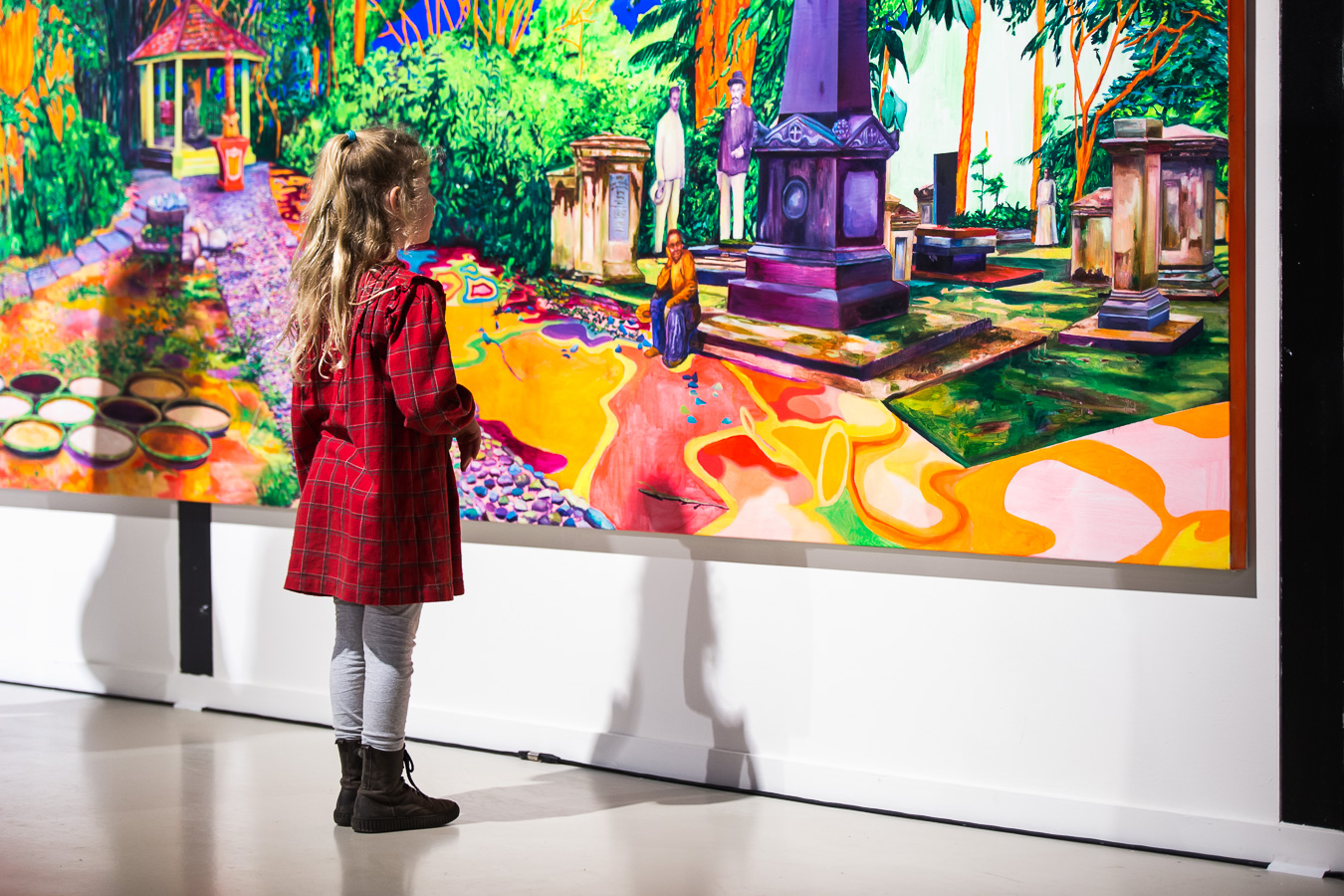
The work that came to exemplify the exhibition is the masterful painting by Zico Albaiquni entitled Ruwatan Tanah Air Beta, Reciting Rites in its Sites (2019). Featured on the exhibition poster, Ruwatan Tanah Air Beta was commissioned by Framer Framed and created in close dialogue between Albaiquni and Boonstra. 12 The six- by two-meter painting dominated the exhibition space, the bold neon colours jumping out from the white walls of Framer Framed [Fig. 3]. Albaiquni uses his signature colour palette to create a strange dream-like world full of figures and symbols. His subject is the same as Sinta Tantra: the Bogor Botanical Gardens. Known in Indonesia as the Kebun Raya Bogor, it was formerly a key forest in the Sundanese kingdom that was overtaken by the Dutch East India Company and established as Buitenzorg.13 Albaiquni’s artwork is a conversation in and within itself, a dialogue between the histories and cultures of the Sundanese of West Java, the colonial settlers, and the modern nation-state of Indonesia.
Drawing your eye back into the centre of the painting is a gazebo built by the Dutch. Albaiquni depicts Indonesia’s first president inside the gazebo, claiming the space following independence and gazing serenely out at the garden beyond. The perspective of the path to the gazebo calls a visitor forward, almost placing you inside the painting. Additionally, in person, the panoramic outlook of the garden creates the sense that trees are enveloping the viewer.
To the left of the painting is a series of statues, one of which was documented by Dutch colonists as Nandi, a divine guardian of the Hindu deity, Shiva. However, in Sundanese culture, Nandi is recognised as a representation of Mundinglaya, a prince from Sundanese folklore. Next to this, a group of children appear to be dancing or playing together. This is a reference to a community who lived on the grounds before a botanical garden was ever established. These indigenous families provided vital botanical knowledge to the colonial directors of Buitenzorg and lived as lived as custodians on the grounds.14
Albaiquni includes all these meticulously gathered details and material fragments in order to convey the pluriversal history of a single site, theentanglements of memory, nature, and culture. I consider his painting to be a visual form of “absolute disorder”, the practice of decolonisation and imagination defined by Vergès. Calling for the decolonisation of museums, in a real and practical way, by dismantling the hegemonic structures of the institutions that have defined us for so long, Vergès implores us to imagine what a so-called post-museum could look like. “Disorder is not chaos,” she writes, “it is the challenge of what those in power call in the world order. 15 The museum, by her account, claims neutrality – a supposed space of safe-keeping away from a disordered world. She emphasises the importance of fictive speculation. What is key to Vergès’ decolonial praxis is an active process of imagination – thinking about and experimenting with new forms of exhibition. Decolonisation is how we make the conditions possible to dream and imagine a new world. Albaiquni’s work is full of imagination. Every moment depicted occurs at the same time, not outside of history, but amongst its layers, ridges, gaps. This temporality is a type of disorder, bringing into question the hierarchies of narratives about culture, history, and nature – what if they can exist together at the sametime? His work is so rich, visually and narratively, that it offers new readings to me, even now.

[Fig. 3] Zico Albaiquni, Ruwatan Tanah Air Beta, Reciting Rites in its Sites (2019), oil and synthetic polymer on canvas, 600 x 200 cm. Commissioned by Framer Framed. Image courtesy of Framer Framed. Photo: Eva Broekema
Moreover, right in the foreground of the painting, appearing flat and floating on the garden grounds, is a critical reflection of Framer Framed. The flat rice baskets gathered together are taken directly from Dutch artist herman de vries’ exhibition basic values, which was presented at the Venice Biennial in 2015, Erasmus Huis at the Jakarta Biennial in 2015, and Framer Framed, Amsterdam, in 2016. 17 Considered a pioneer of ecological art, de vries had always taken an interest in Indonesia but had never visited until this exhibition. Basic values presented various materials: wood, bamboo, seeds, and rice from Kebun Raya Bogor in a stripped back, white cube manner. Both Albaiquni and Boonstra visited the exhibition and were keen to ignite a conversation once the show travelled to Framer Framed. de vries’ work reduced the archipelago to its natural resources that made the Netherlands rich, obscuring the people and cultural importance of such objects – never mind the fact that the rice is sacred for the ruwatan. In fact, in hindsight, I find the exhibition epistemologically violent, precisely in the modern/colonial mode of display that Vergès and Mignolo fight against. The exhibition On the Nature of Botanical Gardens offered the opportunity for a response.
Even without knowing every historical detail reference, Albaiquni’s technique of depth and choice of placement make it clear to any viewer that there are multiple narrative layers at work. The work itself is pluriversal, moving beyond the singular, supposedly universal worldview purported by modernity and colonialism. Within this reading, pluriversity also offers a sense of interconnection between human and non-human lives.18 People and nature are always in relation to each other, represented through the limited colour palette and stretched perspective. By including references to Indigenous communities, pre-colonial knowledge, local spirituality, and contemporary formations – material and cultural – Ruwatan Tanah Air Beta perfectly encapsulates a visual epistemology and practice of decoloniality.
New Perspectives
Following the exhibition at Framer Framed, the painting was purchased by the National Museum of World Cultures (NMVW). In 2022, the painting took centre stage in a section of the permanent exhibition Colonial Inheritance. The exhibition was a complete overhaul of the museum, transforming its previous display. Ruwatan Tanah Air Beta is in the section entitled ‘Plundering the earth’, detailing the extractive logic of colonialism and highlighting its connection to our contemporary climate crisis. As you walk through the exhibition, the painting is obscured, revealed around a corner and nestled into a structure of deep green crates. The painting looks on to the objects and display, the dim lights creating a somber feeling to the area. In contrast to Framer Framed, the vibrant pigments of the painting blend into the exhibition design of the Wereldmuseum. In fact, contemporary art is dotted throughout the exhibition in a vague attempt to disrupt the tradition museal display. I use these words intentionally as the placement of the artworks is not always clearly connected, though each piece is given a description and a display in its own right. Ruwatan Tanah Air Beta, at first glance, appears to connect the objects on display back to the introduction of ‘Plundering the earth’, and relate the museum itself to nature. And yet, the painting feels unexpected, almost out of place. Its wealth of images and stories blend together and have the risk of getting lost within the exhibition. How does its meaning change once it’s within the museum?
I keep coming back to this exhibition; or rather, the pressing themes of the exhibition and its artworks keep coming back to me. I am honoured to have worked on an exhibition (albeit as an intern) that is still resonating with people enough to be part of a conversation at the International Institute for Asian Studies. Each artwork in the exhibition is deserving of an entire essay for itself, I select these two which bring forth, for me, the power of imagination in art. As Vergès argues, before we can even begin to decolonise the museum, we must be able to imagine a new world, and new possibilities, without it – what she terms the potential “post-museum”. The works of Zico Albaquni and Sinta Tantra present polyphonic histories and in a way which ignites my own imagination. These decolonial perspectives are still urgently needed – in the art space, in the museum, in the botanical garden – because our business with colonialism is still very much unfinished.
Notes
1. Lucile Brockway. “Science and Colonial Expansion: the Role of the British Royal Botanic Gardens.” American Ethnologist: Interdisciplinary Anthropology, vol. 6, no. 3 (August 1979): 449-465.
2. Londa Schiebinger. Plants and Empire: Colonial Bioprospecting in the Atlantic World. Harvard University Press, 2004.
3. Previous programmes include The Colonial Gaze (2009), The Exotic Gaze (2010), Contested History (2012), and Hacking History (2012).
4. André Desvallées and François Mairesse. Key Concepts of Museology. ICOM International Committee for Museology (ICOFOM), (2010): 50-52.
5. Tony Bennett, “The Exhibitionary Complex.” New Formations, no. 4 (Spring 1988): 73-102.
6. Françoise Vergés. A Programme of Absolute Disorder Decolonizing the Museum. Pluto Press, 2024.
7. Aníbal Quijano, Foundational Essays on the Coloniality of Power, Duke University Press, 2024.
8. Mirjam Shatanawi “Foreword”, Emptying the Shelves. Framer Framed, Roots to Fruits, (2025): 484-489.
9. Framer Framed. “Virtual Tour by Curator Sadiah Boonstra.” YouTube, May 4, 2020. https://www.youtube.com/ watch?v=BNp9APWTqps.
10. Maan Barua, Rebeca Ibanez Martin and Marthe Achtnich. “Introduction: Plantationocene.” Theorizing the Contemporary, Fieldsights, (January 24 2023), https://culanth.org/fieldsights/introduction-plantationocene.
11. Rolando Vázquez, “Modernity coloniality and visibility: The politics of time.” Sociological Research Online, vol.14, issue 4 (September 2009): 109-115.
12. Framer Framed. “Interview with Curator Sadiah Boonstra | on the Nature of Botanical Gardens.” Vimeo, April 9, 2020. https://vimeo.com/405785189 by the author.
13. National Museum of World Cultures. “Kebun Raya Bogor – from Experimental Garden to Whistle Blower.” Wereldmuseum Amsterdam, 2020. https://amsterdam.wereldmuseum.nl/en/collection-stories/kebun-raya-bogor-from-experimental-garden-to-whistle-blower.
14. Framer Framed. “Artist Talk: Arahmaiani, Lifepatch, Zico Albaiquni, and Curator Sadiah Boonstra.” YouTube, August 4, 2020. https://www.youtube.com/ watch?v=ckRVKSIn45A.
15. Francoise Verges, A Programme of Absolute Disorder. Pluto Press, 2024.
16. Walter Mignolo, “Contexts: Coloniality Is Far From Over, and So Must Be Decoloniality.” Afterall, A Journal of Art Context and Enquiry, (March 2017): 44.
17. Framer Framed. “Exhibition: Herman de Vries / Basic Values – Framer Framed.” Framer Framed, 17 February 2022. https://framerframed.nl/en/exposities/ herman-de-vries.
18. Arturo Escobar, Designs for the Pluriverse: Radical Interdependence, Autonomy, and the Making of Worlds. Duke University Press, 2018. Botanical Worlds: Plants and Seeds in Social Context
Institutional Critique / Ecology / Shared Heritage / Indonesia / Colonial history / Museologie / Southeast Asia /
Exhibitions
Exhibition: On the Nature of Botanical Gardens
Contemporary indonesian perspectives by nine Indonesian artists
Network