27 Mar 2026
10:00 - 15:15
DATAGOV: Governance by Data Infrastructure in the Post-Pandemic Democracy
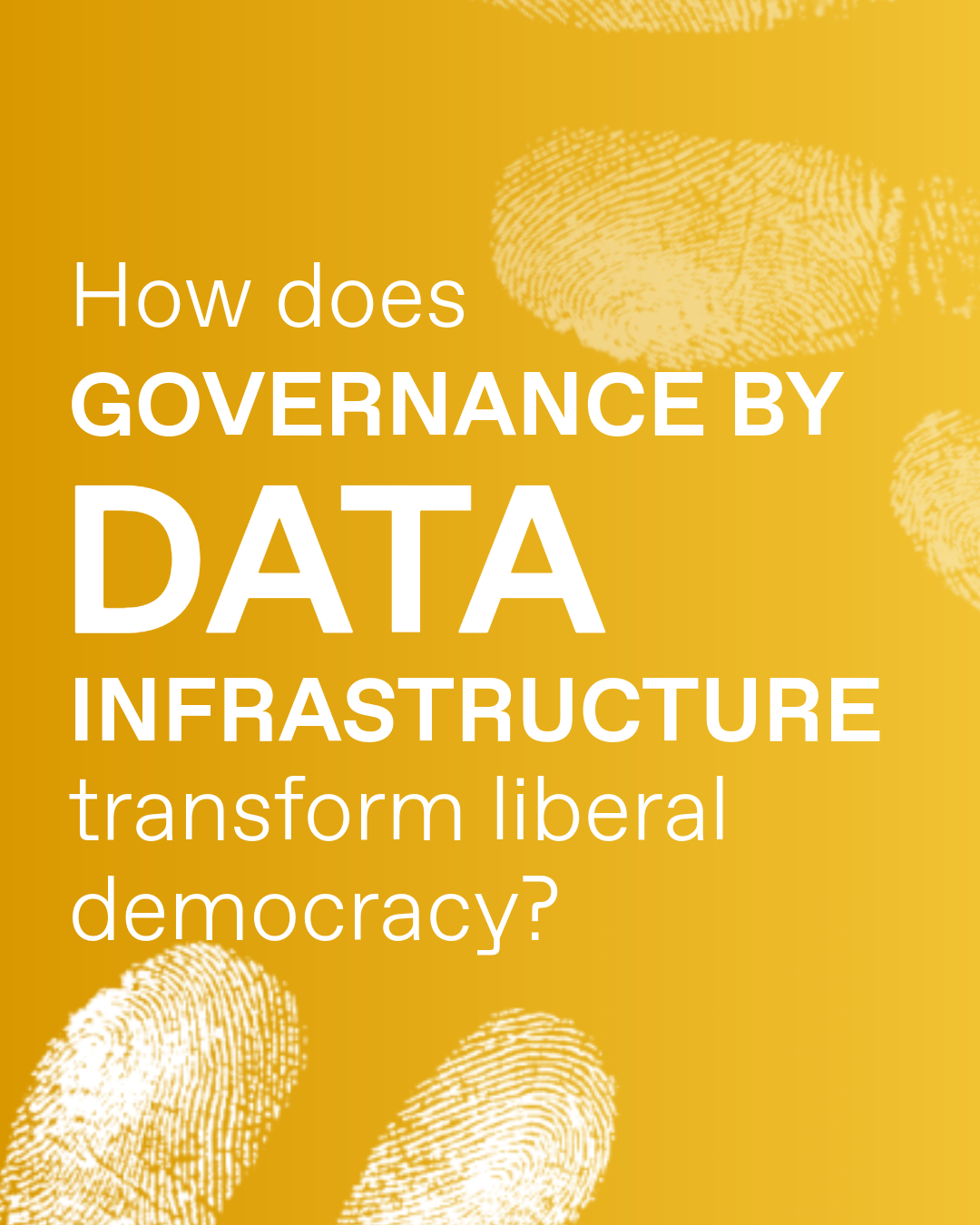
Data infrastructures such as digital identity systems and biometric technologies increasingly decide who is seen, sorted and served, while remaining largely out of public view. On 27 March 2026, DATAGOV Lab, a project initiated by the University of Amsterdam, invites audiences to pull these systems into the open and join a cross-sector conversation on how data-driven regulation is reshaping democracy, rights and inequality worldwide.
DATAGOV investigates the impact and social costs of regulatory data infrastructures: data-grabbing systems that actively shape the polity, from monitoring and automated decision-making to mediating access to public services, rights, and welfare.
The project takes a comparative approach, examining the European Union, Brazil, India, and South Africa to understand how these infrastructures transform governance and what they mean for the future of democracy in an era of pervasive datafication. The initial empirical focus is on four technology families: biometrics, digital identity, health technologies, and education technologies, and how these reconfigure citizenship, sovereignty and inequality.
Speakers
The event features conversations and presentations by:
Louise Amoore (Durham University),
Fernando Filgueiras (Brazilian Ministry of Education),
Mirca Madianou (Goldsmiths, University of London),
Rocco Bellanova (Vrije Universiteit Brussel),
Cecilia Passanti (Université Paris Cité),
Rob van Kranenburg (IEEE Standards Association),
Bidisha Chaudhuri (University of Amsterdam),
Niels ten Oever (University of Amsterdam),
Please register here.
Programme
10:00 – 10:45 Welcome & Introduction
10:45 – 12:15 Panel 1 – Governing by Data Infrastructure: Tensions and Fault Lines
12:15 – 13:15 Lunch
13:15 – 14:45 Panel 2 – Global Perspectives on Governance by Data Infrastructure
14:45- 15:15 Closing Reflections
10:45 – 12:15 Panel 1 – Governing by Data Infrastructure: Tensions and Fault Lines
12:15 – 13:15 Lunch
13:15 – 14:45 Panel 2 – Global Perspectives on Governance by Data Infrastructure
14:45- 15:15 Closing Reflections
Location
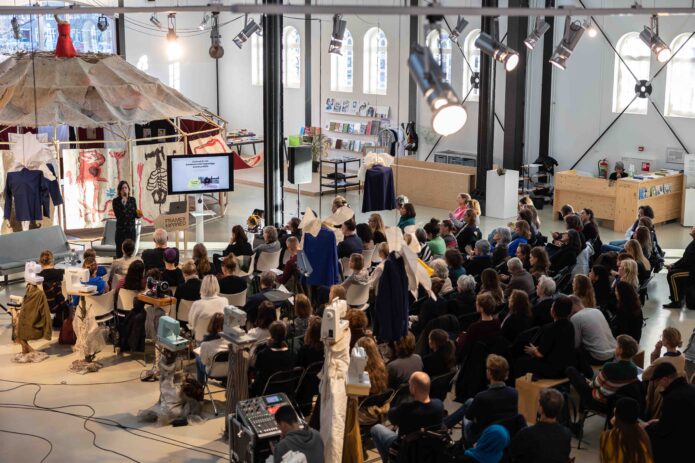
Framer Framed
Oranje-Vrijstaatkade 71
1093 KS, Amsterdam
Biographies
Rocco Bellanova is a Research Professor at the Vrije Universiteit Brussel (Belgium). He works at the intersection of politics, law and science and technology studies. He studies how digital data become pivotal elements in the governing of societies. He is the PI of the ERC project DATAUNION, focusing on European database interoperability.
Niels ten Oever is an Assistant Professor in the Department of European Studies and Co-Principal Investigator of the Critical Infrastructure Lab at the University of Amsterdam.
Fernando Filgueiras is a Professor at the Federal University of Goiás, Brazil. Director of Innovation and Digital Strategy at the Brazilian Ministry of Education. Researcher at the National Council for Scientific and Technological Development (CNPq). Researcher at the National Institute of Science and Technology – QualiGov.
Mirca Madianou is Professor in the School of Media, Communications and Cultural Studies at Goldsmiths, U of London. Her work focuses on the social consequences of digital infrastructures and AI in the context of migration and humanitarian emergencies.Her latest book is ‘Technocolonialism: when technology for good is harmful’.
Cecilia Passanti has a PhD in STS on computing and computer professionals in the making of the state and citizenship in West Africa. She is interested in the globalisation and decolonisation of citizenship in the 1960s, and their links to the emergence of today’s system of surveillance and digital governance.
Dr. Bidisha Chaudhuri is an Assistant Professor of Government, Information Cultures and Digital Citizenship at Department of Media Studies at the University of Amsterdam and Research Partner at the Max Planck Institute of Social Anthropology. Her current research focuses on digital public infrastructure.
Rob van Kranenburg is the Founder of the IoT Council and #iotday. He has 25 years of experience as author, his last book being “Statecraft and Policymaking in the Age of Digital Twins”.
Louise Amoore is professor of political geography and Director of the Leverhulme Centre for Algorithmic Life at Durham University, UK. Her research addresses the politics and ethics of machine learning technologies, biometric borders, and the social power of algorithms.
Info & Credits
This event is in English. Admission is free, pay what you can. Do you also think art should be free and accessible? Please consider supporting us with a donation when registering or by becoming a Framer Framed Friend!
The event may be photographed and filmed. Kindly let us know in advance if you prefer not to have your picture taken. For seated programmes, places are always made available for wheelchair users. Please speak to the host before the programme begins.
DATAGOV Lab is funded by the European Research Council (ERC). Framer Framed is supported by the Ministry of Education, Culture and Science; Amsterdam Fund for the Arts; Municipality of Amsterdam; and VriendenLoterij Fonds.
Democracy, Digital Commons & Digital Autonomy / Politics and technology /