11 Sep –
27 Sep 2026
Presentatie: Menaut Waktu. Merekam Jejak. (Threading Time. Archiving Traces.)
From 11 to 27 September 2026, Framer Framed hosts the presentation Menaut Waktu. Merekam Jejak. (Threading Time. Archiving Traces.), displaying the outcome of artist Jay Afrisando’s work as part of the Atelier KITLV-Framer Framed residency programme.
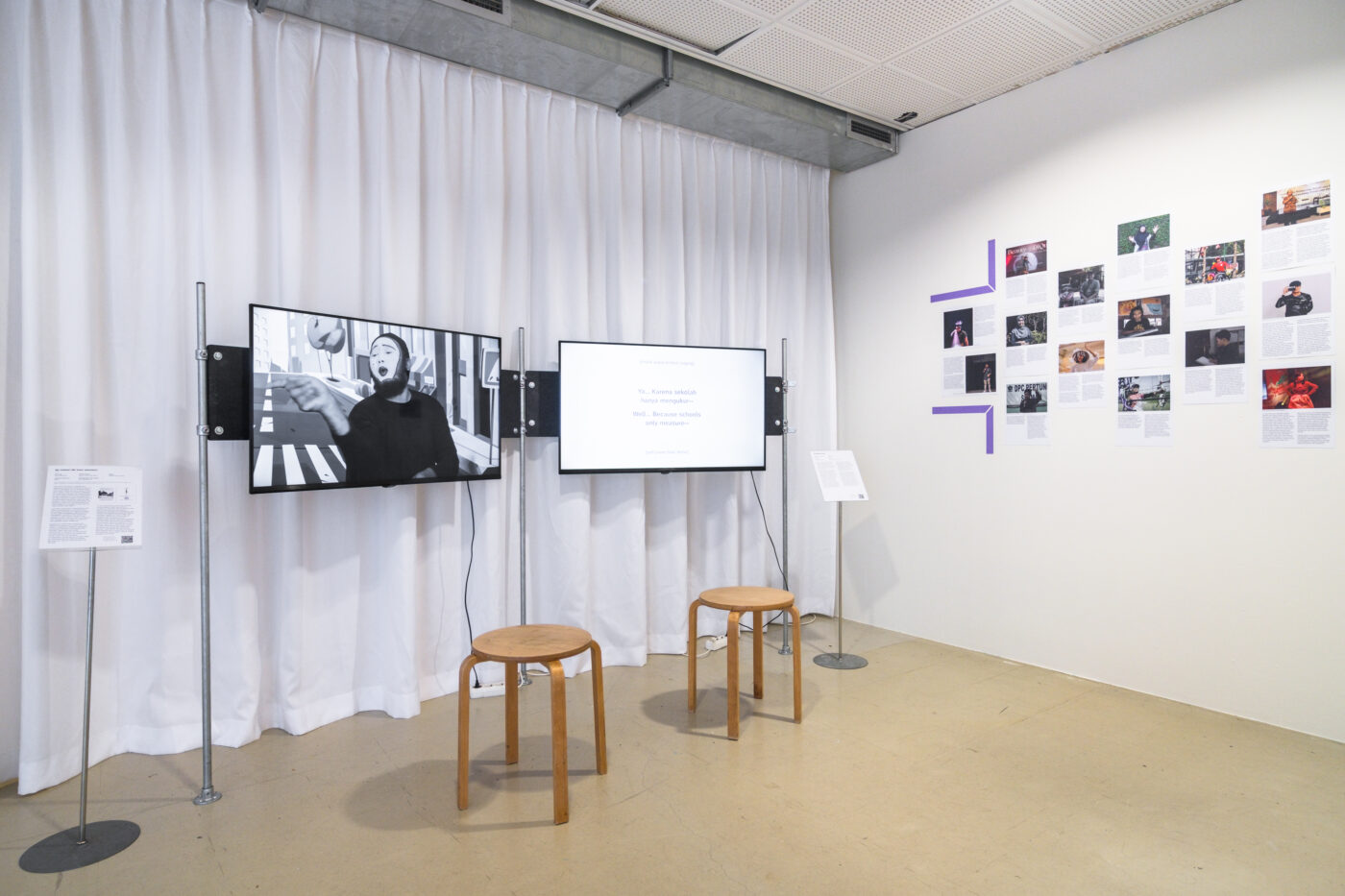
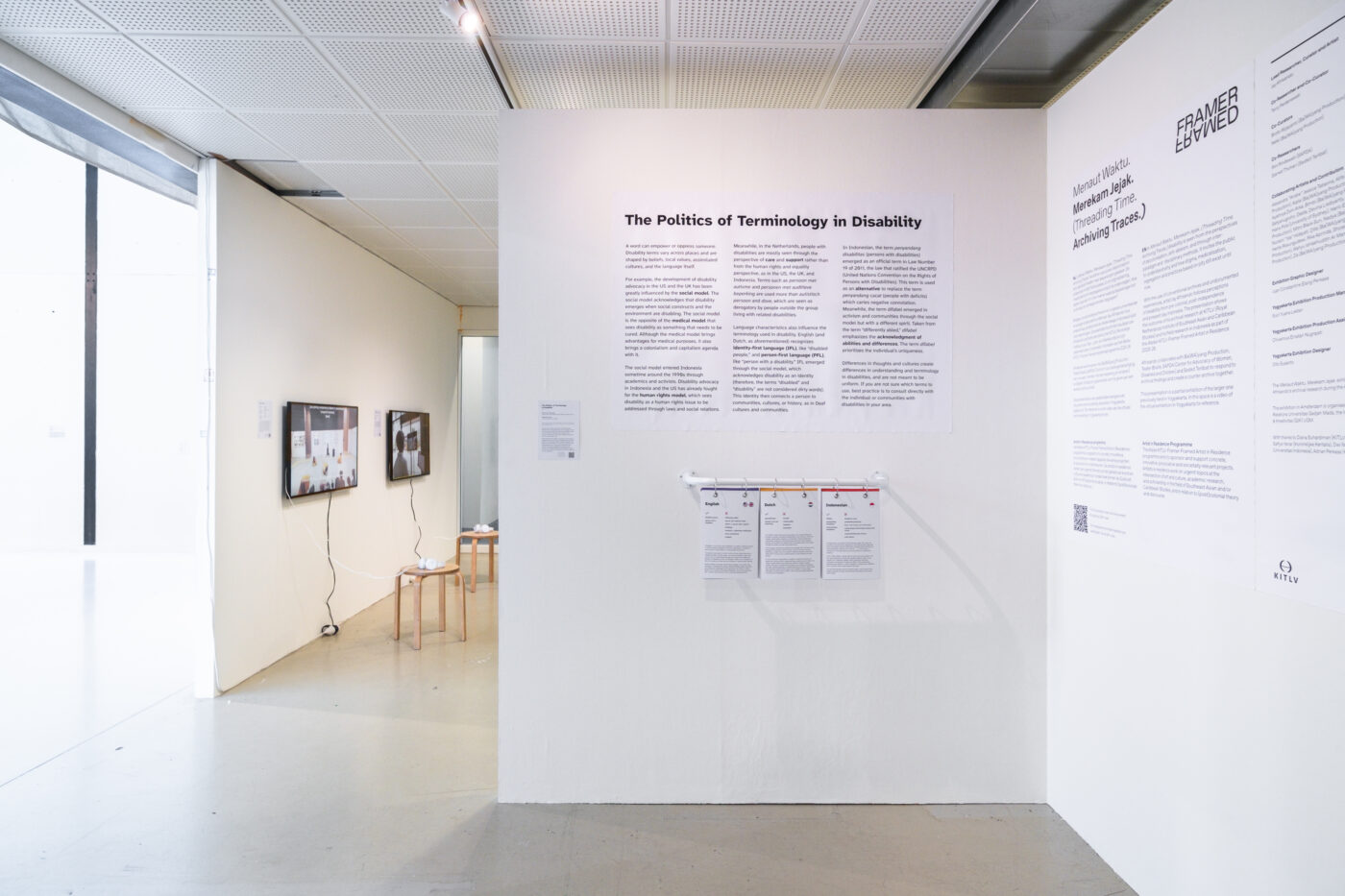
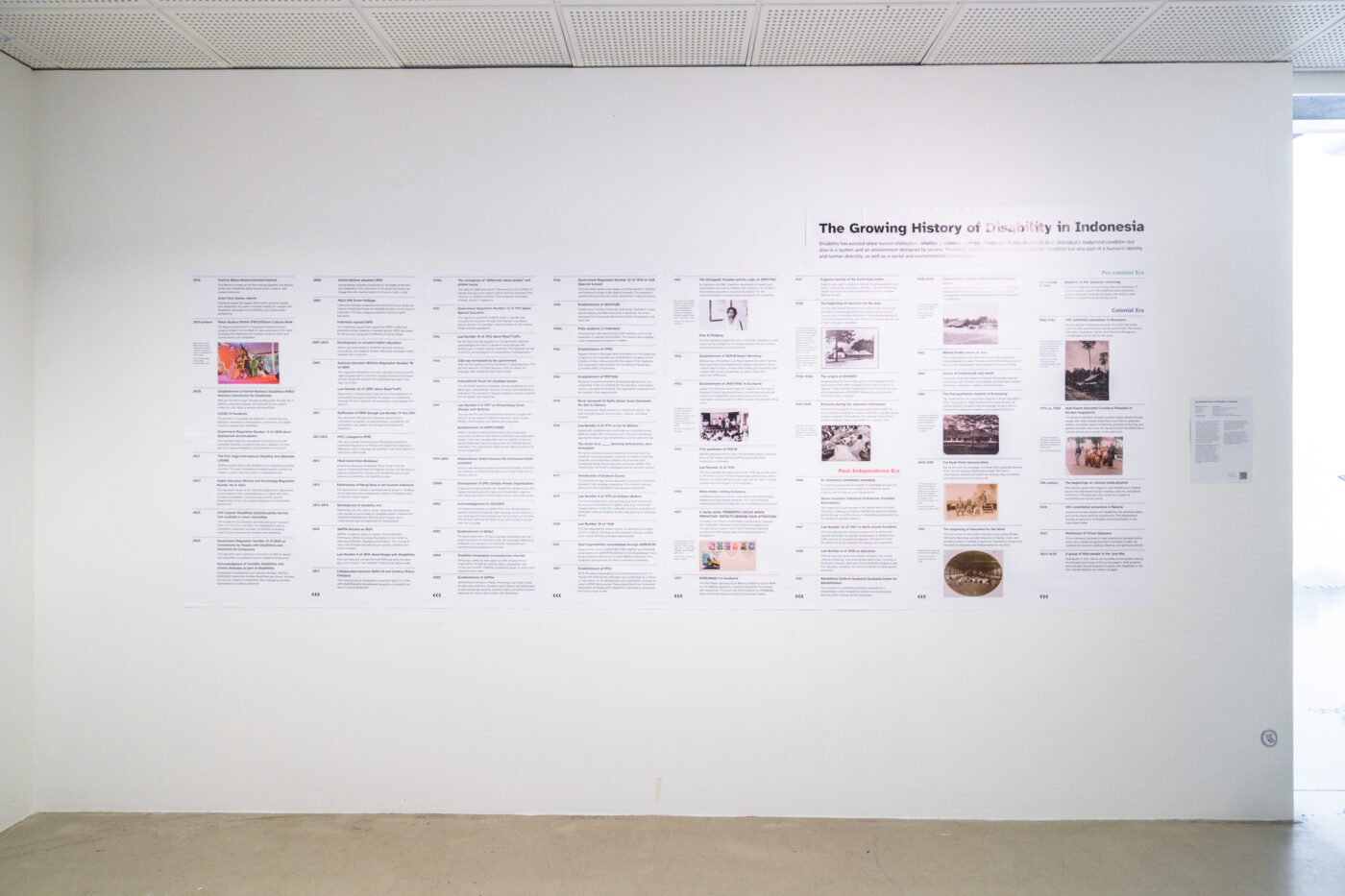
The presentation presents a growing collaborative archival and counter-archival practice that follows perceptions of disability from pre-colonial, post-independence and present day Indonesia. It examines the complex factors that have shaped disability discourses through the arts, archives, body-minds and collaborative practices between artists, researchers, communities and disabled people. It intends to be a meeting site for the past and the present, for conventional archives and undocumented experiences and for the inter-human.
Menaut Waktu. Merekam Jejak. (Threading Time. Archiving Traces.) is the outcome of Afrisando’s archival research at KITLV – Royal Netherlands Institute of Southeast Asian and Caribbean Studies, and his field research in Indonesia as part of the Atelier KITLV-Framer Framed Artist in Residence 2025-2026. Instead of merely presenting the archival findings, Afrisando collaborates with Ba(WA)yang Production, Teater Braille, SAPDA (Center for Advocacy of Women, Disabled and Children) and Sedikit Terlibat to curate, respond to archival findings and create a counter-archive together.
In this presentation, disability is seen from the perspectives of decolonisation, anti-ableism, and through inter-paradigm and -disciplinary methods. It invites the public to understand why and how stigma, medicalisation, segregation and practices based on pity still exist until now. Doing so also allows visitors to investigate discrimination and inequality that happens even to those who do not identify themselves as disabled, and open perspectives into various constructions of knowledge and practice full of inequality and partiality. Therefore, (re)reading disability means not only reading the world, but imagining and realising a different future.
Menaut Waktu. Merekam Jejak. (Threading Time. Archiving Traces.) was previously on display at Gelanggang Inovasi & Kreativitas, UGM, Yogyakarta, and is supported by Department of International Relations UGM, Institute of International Studies UGM, Gelanggang Inovasi & Kreativitas, KITLV and Framer Framed.
The Yogyakarta exhibition also included discursive events, such as an exhibition tour by curator Jay Afrisando; a launch & discussion of Slamet Thohari’s book Cerita-Cerita yang (Tidak) Mungkin; an academic discussion forum with Global Humanities Alliance; a panel discussion Archive & Counterarchive in Disability Studies with Jay Afrisando, Suci Lestari Yuana (Institute of International Studies, Universitas Gadjah Mada), Dewi Laurente (Framer Framed), Yuda Wira Jaya (Teater Braille) and Slamet Thohari (moderator, Sedikit Terlibat); a movie screening & discussion as part of UN Women Pre-Conference, a talkshow & workshop with KOMAHI UGM, Sound Experience in the Dark with Teater Braille, and an exhibition closing with Ba(WA)yang Production.
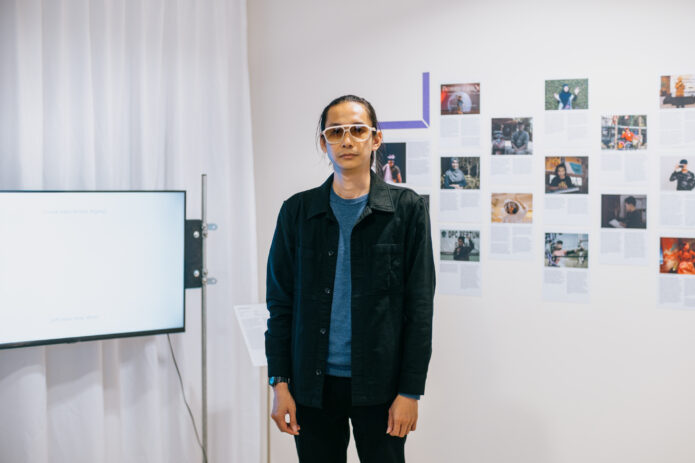
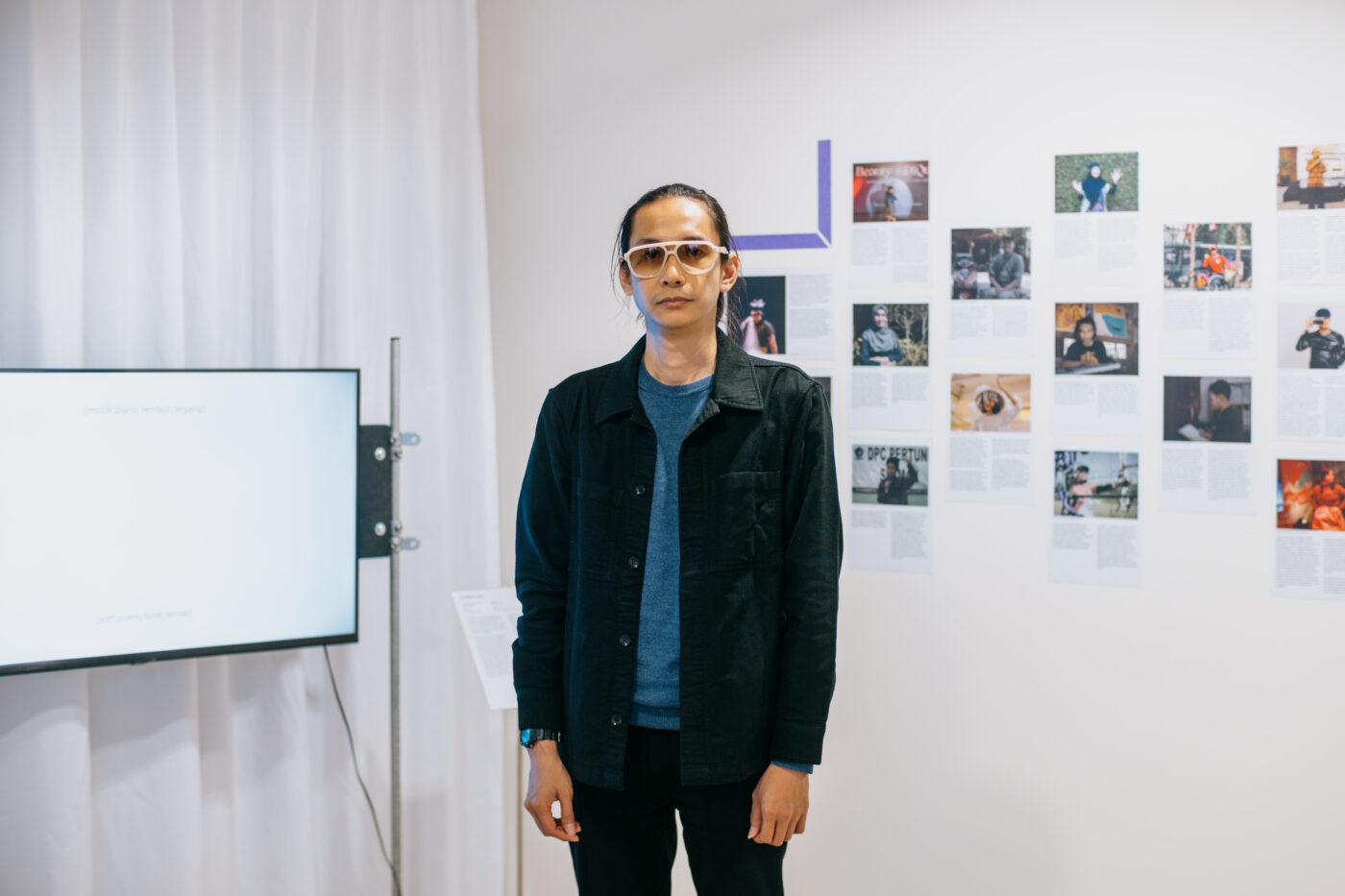
Jay Afrisando, a medium-skin-toned male with bunned hair, standing in Framer Frameds project space in a serious pose with his arms down. He wears black pants, a blue shirt, a black jacket and tinted glasses. Photo: © Ben Yau / Framer Framed
Info & Credits
Accessibility Information
– Dutch Sign Language/Nederlandse Gebarentaal interpretation is provided during Jay Afrisando’s English speech and exhibition tour on the opening day from 18:00-19:00.
– Stools are available in the exhibition space for comfortable viewing.
– Most videos are captioned in English and Indonesian, except for one pantomime video.
– All works have QR codes that link screen readers to the digital text and/or visual descriptions of the works.
DSL interpretation is provided during Afrisando’s speech and exhibition tour on the opening day from 18:00-19:00.
Opening
11 September 2026
Opening Times
12 – 27 September 2026
Tue – Sun, 12:00 – 18:00
Location
Framer Framed
Oranje-Vrijstaatkade 71
1093KS, Amsterdam
The Netherlands
Free entry, pay what you can.
Framer Framed is supported by the Ministry of Education, Culture and Science; Amsterdam Fund for the Arts; the Municipality of Amsterdam; and VriendenLoterij Fonds.
Het levende archief / Amsterdam Oost / Indonesië / Koloniale geschiedenis / Residenties /
Agenda
Call and Response: Archive and Counterarchive
Panel discussion on archival research which explores the impact of Dutch colonialism on disabled/difabel people in Indonesia together.
Netwerk