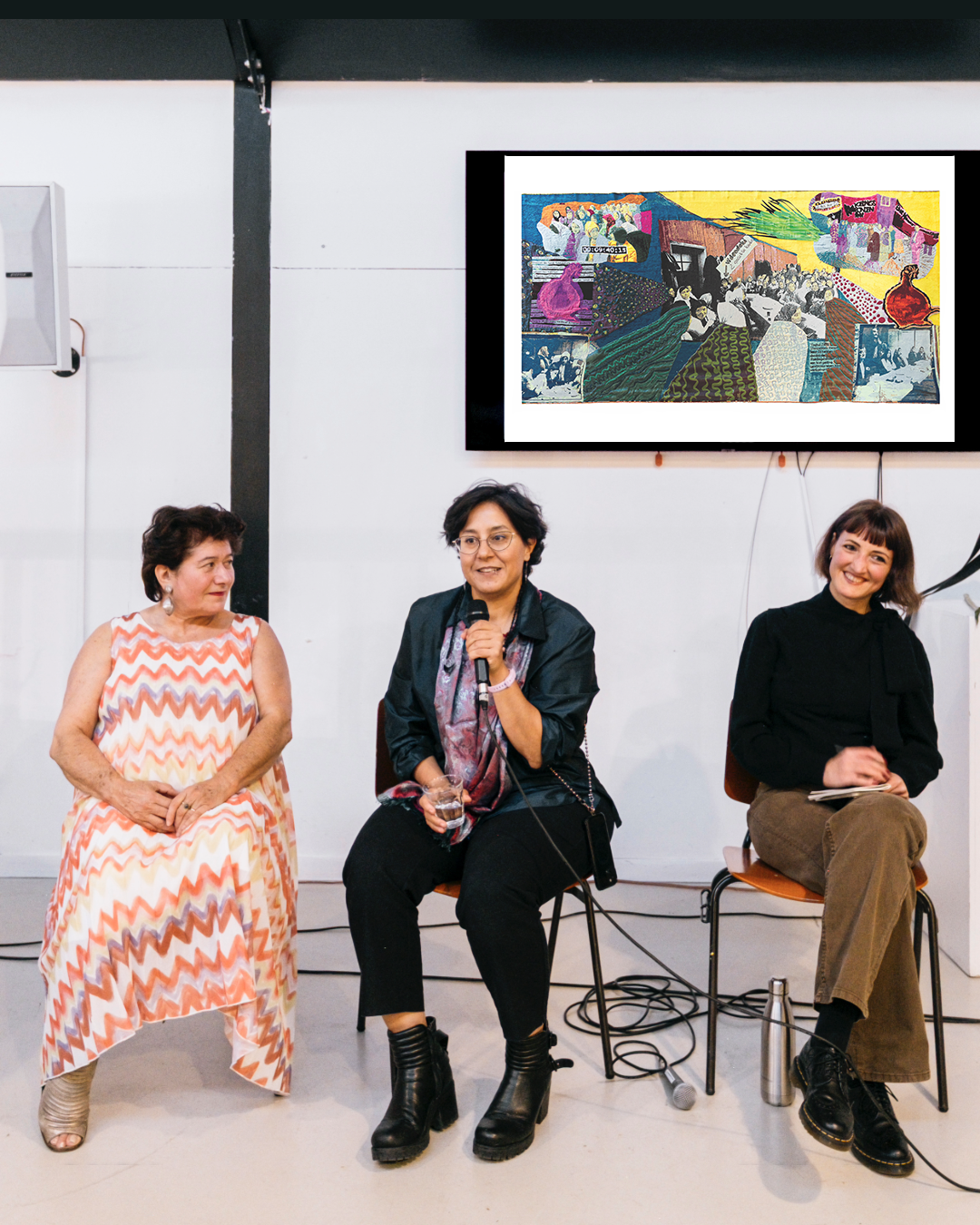
Curatorial Statement: Katia Krupennikova on the exhibition Remembering Otherwise
Remembering Otherwise is a solo exhibition by artist belit sağ and curator Katia Krupennikova, which gives form to the stories of a pivotal 1978 labour dispute in North Brabant, led by migrant women workers from Turkey. In her curatorial statement, Katia Krupennikova draws attention to the immersive nature of the exhibition, and its intention to give light to what Dutch archives have left in the dark.
Text by Katia Krupennikova
The exhibition Remembering Otherwise (2025) is taking place at a crucial and fractured moment in the Netherlands, coinciding with the national elections of a new cabinet. It opens in a climate of right-wing sentiments and anti migrant rhetoric. The recent political shifts have amplified social divisions, increasingly defining Dutch society by its borders – both physical and ideological. Remembering Otherwise rejects this mood and manifests solidarity not as an abstract concept, but as an urgent and active practice. The installation reflects on the politics of narration and historical truth: who is seen a who is rendered unimportant, whose stories are archived and how, who is remembered and who is forgotten.
Our collaboration evolved from a long-standing professional and personal relationship and shared artistic and political sensibilities. I have known belit sağ for a long time and have been planning this collaboration for a considerable period. However, the cascade of global crises – the COVID-19 pandemic, Russia’s full scale invasion of Ukraine, the earthquake in Turkey, and the ongoing genocide in Gaza – continuously transformed our plans and called for other urgencies. These events made some artistic concepts feel distant and unimportant.
Remembering Otherwise is a project that sağ has been developing for a few years. It is focused on migrant women from Turkey coming together, on their solidarity and historiography. It is different from the usual curated exhibition. It is not merely a representation of the artist’s artworks, but involves close, intimate collaboration; a slow and careful process of mutual listening. It is a project built on the principle of holding – holding each other as collaborators, holding the stories we are handling, and holding the audience we invite in. We have intertwined our ideas so that the resulting installation is a singular, holistic vision.
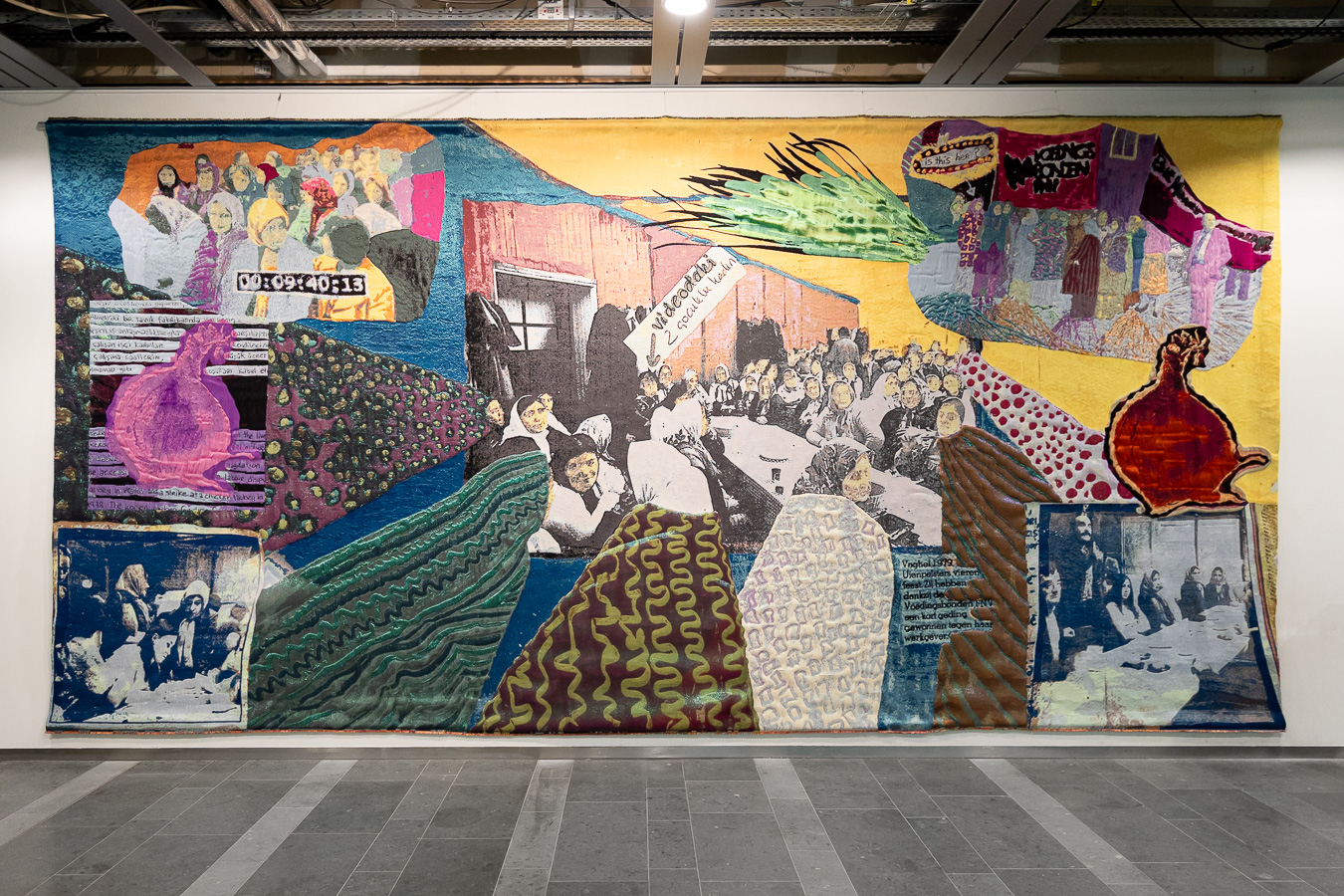
When sağ first presented her collages, I was struck by their tangibility and we decided to transform them into tapestries. By taking the images apart and merging several collages into a single kaleidoscopic image, sağ brought a series of collages together into a large-scale weaving. Tapestries are tactile and often associated with the domestic space. In Turkey, they are traditionally produced communally by women and often carry symbolic meaning. They represent the interweaving of threads into a stronger whole, a perfect metaphor for the solidarity we wished to embody.
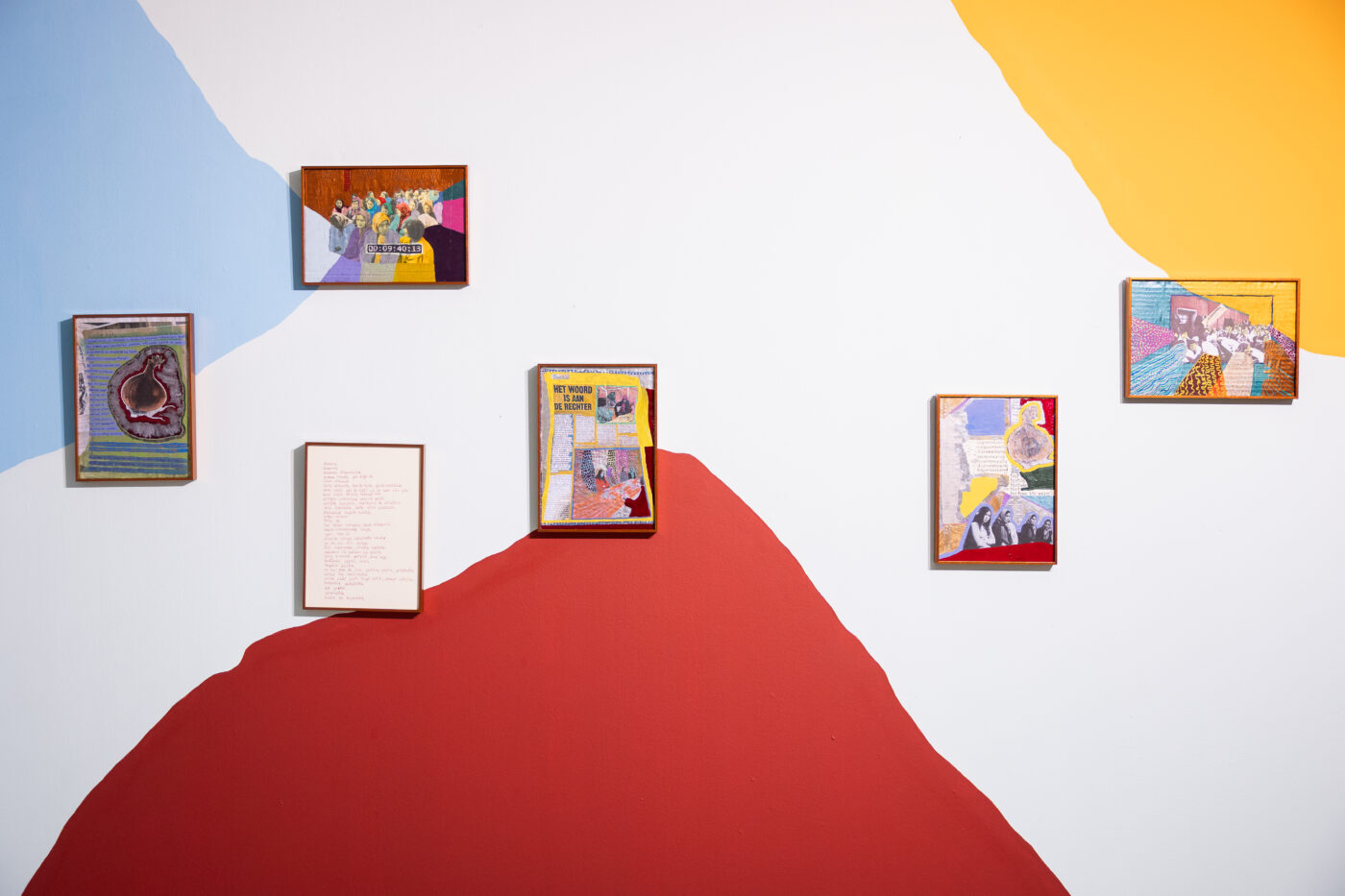
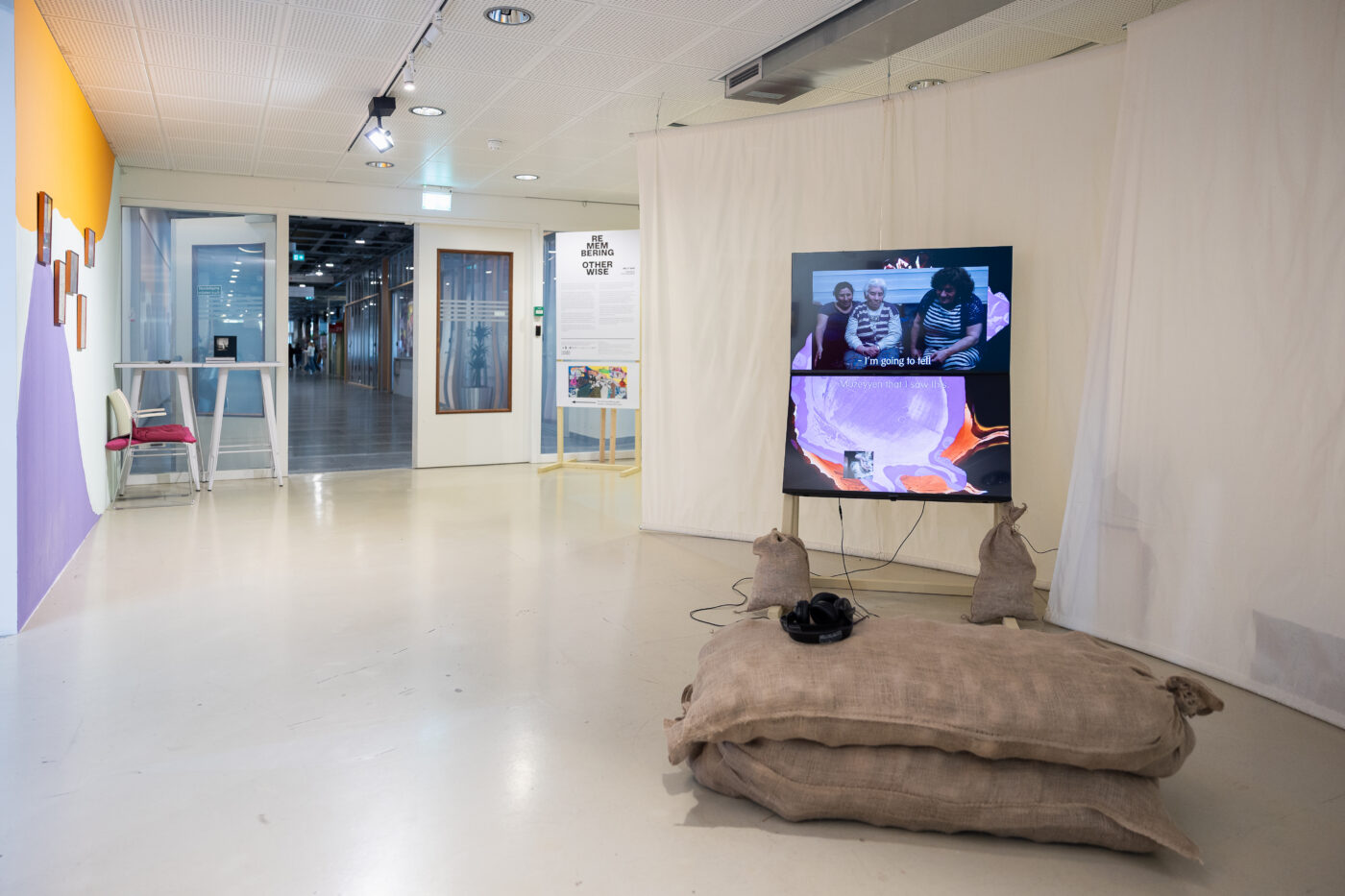
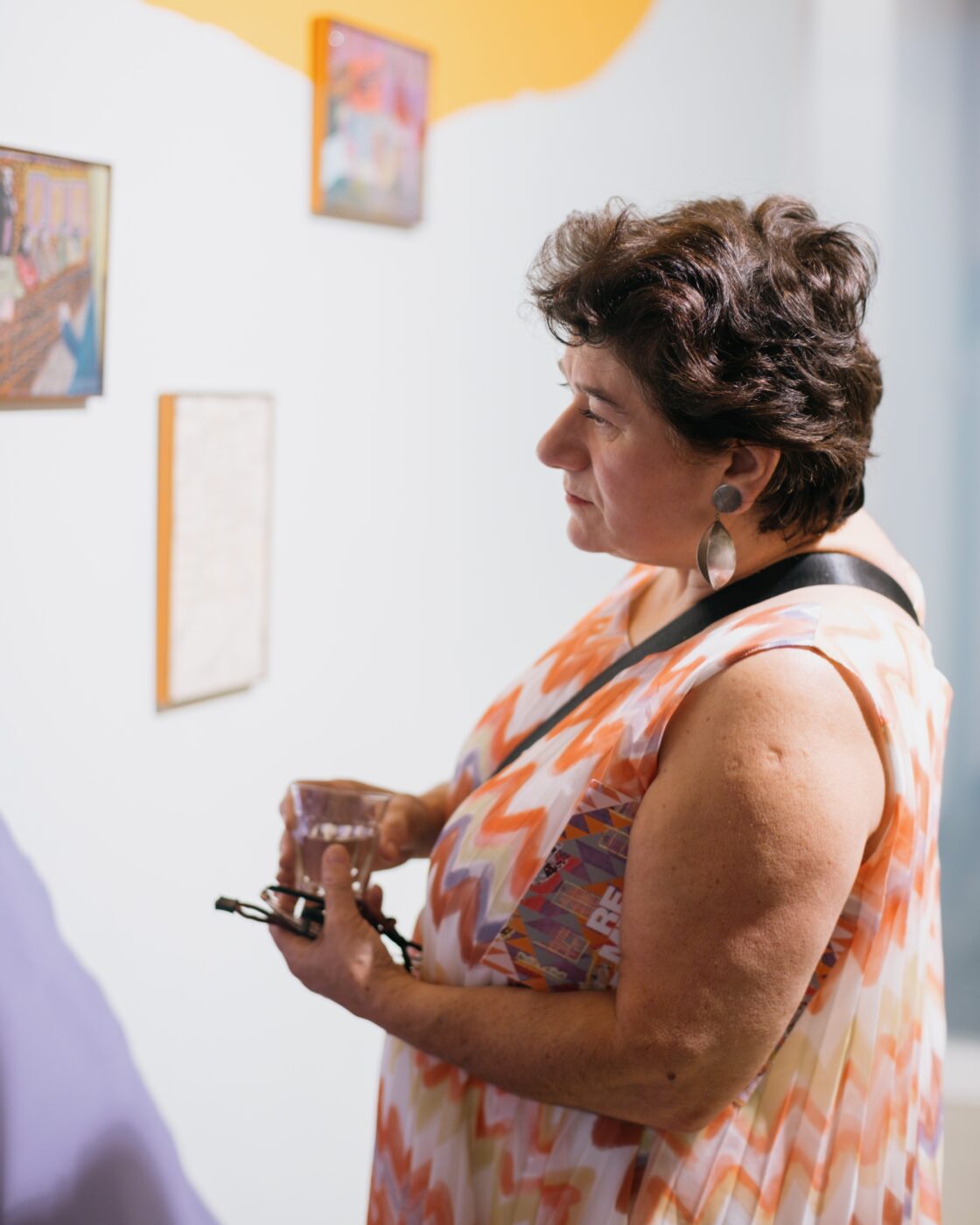
This project felt uncomfortable within institutional walls: to challenge this framing, we consciously sought to break the neutrality of the white cube. We aimed to create an immersive environment, which one can find in every detail. Remembering Otherwise is not a space for passive observation but for sensory engagement, where every element is intentionally custom-made. The bright colours of the collages challenge their own borders; they pour out with juicy tones onto the white walls, actively taking over the space. The frames holding the collages were hand-painted with nail polish, which is also present in the collages themselves, adding a personal, bodily aesthetic. The videos do not simply play in isolation; they are in dialogue, looking at each other – communicating with the audience and responding to the collages.
The textile walls behind the videos function as a backdrop. However, their texture and layeredness might subtly remind one of dried onion peels – a material central to the story of the women. It is part of the mundane that contains many layers, which provoke a strong physical reaction in the eye. The seating for the audience is also specially designed for this exhibition. Rejecting standard benches or chairs, we imagined seating that would root the viewer physically in the work’s themes: the audience sits on sacks filled with onions. This is a deliberate, perhaps discomforting choice. It grounds the experience in the tangible labour of the protagonists’ hands. The visitors are sitting on the product of this immense and uncomfortable labour, making viewing a conscious act of bearing witness to the women’s stories.
Questioning the archive and its function, creating and visualising knowledge, is very important to this project. belit’s research began within the formal state archives. She was investigating the histories of migrant women who organised and led one of the first unions in the Netherlands in the 70s-80s, fighting for basic workers’ rights. Yet, within those official records, she did not find what she was looking for: the women themselves. They were statistical presences, nameless contributors to a broader narrative of labour history. Their individualities, fears, happy moments, relations, and even their names were absent. This archival silence felt like an injustice, and through this project, sağ has created a counter-archive that centres the women.
Gloria Wekker and Nancy Jouwe, in their work on Dutch Black and postcolonial feminist thought, articulated the concept of kaleidoscopic visions. It rejects the single, authoritative, and often white male colonial perspective of history. It understands knowledge and memory as fragmented, multifaceted, and shifting. It seeks knowledge not in a single official record, but in the accumulation of peripheral glances, personal stories, and embodied memories. In this installation, the official archive is deliberately present only as a ghost, a faded reminder of a past moment in the research process. The materials found in the archive are represented by a linear timeline created by the artist – a sequence of past events presented as almost unreadable, reduced to the status of a footnote or a trace. They are just the starting points from which sağ began to build another history from a migrant perspective.
What we centralise in Remembering Otherwise are the stories of the women, reconstructed through the kaleidoscopic lens of artistic intention and solidarity. We ask: what did the archives fail to archive? What was left at the margins? The archives record the dry details – dates, court case numbers, names of officials. But the women, in their own oral histories and communal memories, didn’t remember those. They remembered their own events, the elements that had meaning for them – their shared stories, potent emotions, and personal relations. These are the things that escape the archive’s grasp yet constitute the very core of human experience and political resistance. Remembering Otherwise is thus a counter-archive – one made of thread, colour, moving images, and the scent of onions. It is an archive of emotion, of presence, and of solidarity that reaches from the past into our urgent present, connecting generations and offering an inspiring example of togetherness.
Katia Krupennikova, 2025.
Remembering Otherwise (2025) is supported by the Ministry of Education, Culture, and Science (MinOCW), AFK (Amsterdam Fund for the Arts), Stadsdeel Oost, Mondriaan Fund, the public fund for visual art and cultural heritage, SAHA Foundation, PPO Werktuig, Amarte Fund and in collaboration with the TextielLab, the Textiel Museum’s professional workshop.
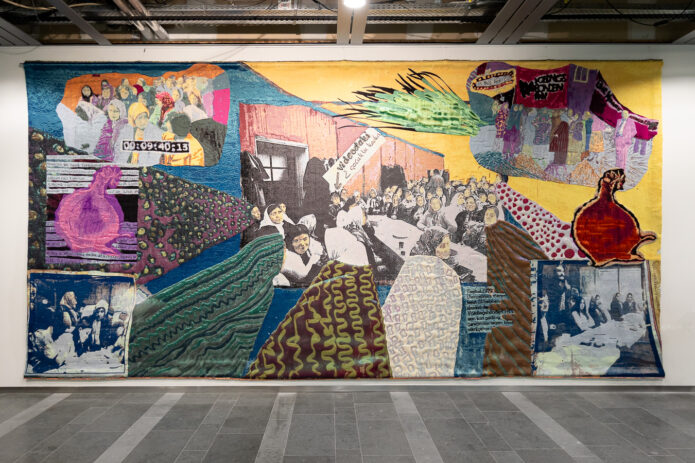
belit sag, ‘Weaving Solidarity’ (2025) on show at Framer Framed and the Municipality of Amsterdam. Tapestry 7m x 3.5m
- Exhibition Companion EN - Remembering Otherwise
- Tentoonstellingsgids NL - Remembering Otherwise
Attachments
Curatorial Text / Feminism / The living archive / Migration / Turkey /
Exhibitions
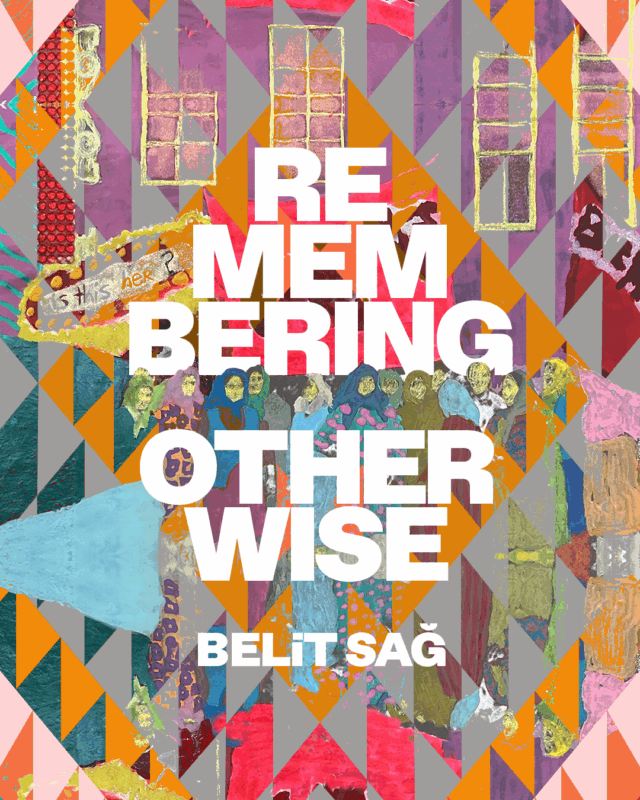
Exhibition: Remembering Otherwise
Solo exhibition by artist belit sağ in collaboration with curator Katia Krupennikova on a pivotal 1978 labour dispute led by migrant women workers from Turkey
Agenda
Opening Exhibition: Remembering Otherwise - OBA De Hallen
Opening of Remembering Otherwise by belit sağ in OBA De Hallen, with an introduction by district mayor Fenna Ulichki, musical performances, readings and a panel talk with the artist
Screening: Eye on Art – Remembering Otherwise
A special film screening and Q&A at Eye Filmmuseum with artist belit sağ for her Framer Framed exhibition, Remembering Otherwise.
Finissage: Remembering Otherwise
Finissage of the exhibition Remembering Otherwise, diving into the story of three migrant women workers from Turkey
Guided Tour in Turkish: Remembering Otherwise
Guided Tour in Turkish by artist belit sağ through the exhibition Remembering Otherwise
Opening: Remembering Otherwise
Opening of the solo exhibition artist belit sağ, conceived in close collaboration with curator Katia Krupennikova.
Network
belit sağ
Artist, Educator