Verslag: Nucleaire technologie en sociale bewegingen
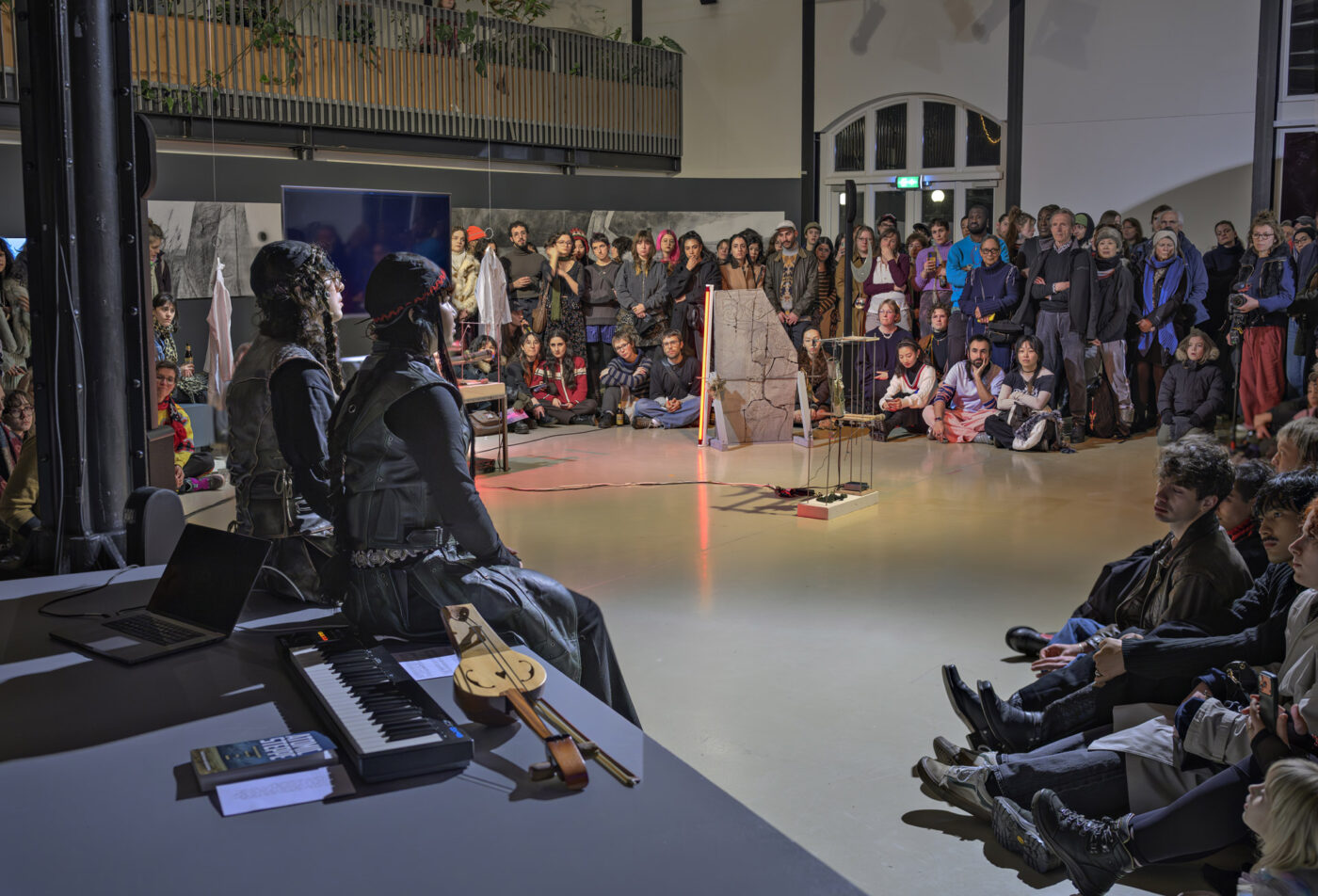
Set in the exhibition space of Between Fires at Framer Framed, the conversation Nuclear Histories and Protest Movements brought together artists and researchers to reflect upon the legacies of nuclear testing and anti-nuclear resistance. Presented in collaboration with Sonic Acts, the afternoon transitioned from a roundtable dialogue, to a sensorial lecture-performance by Yeon Sung.
Text by Zoe M’Poko
April 2026
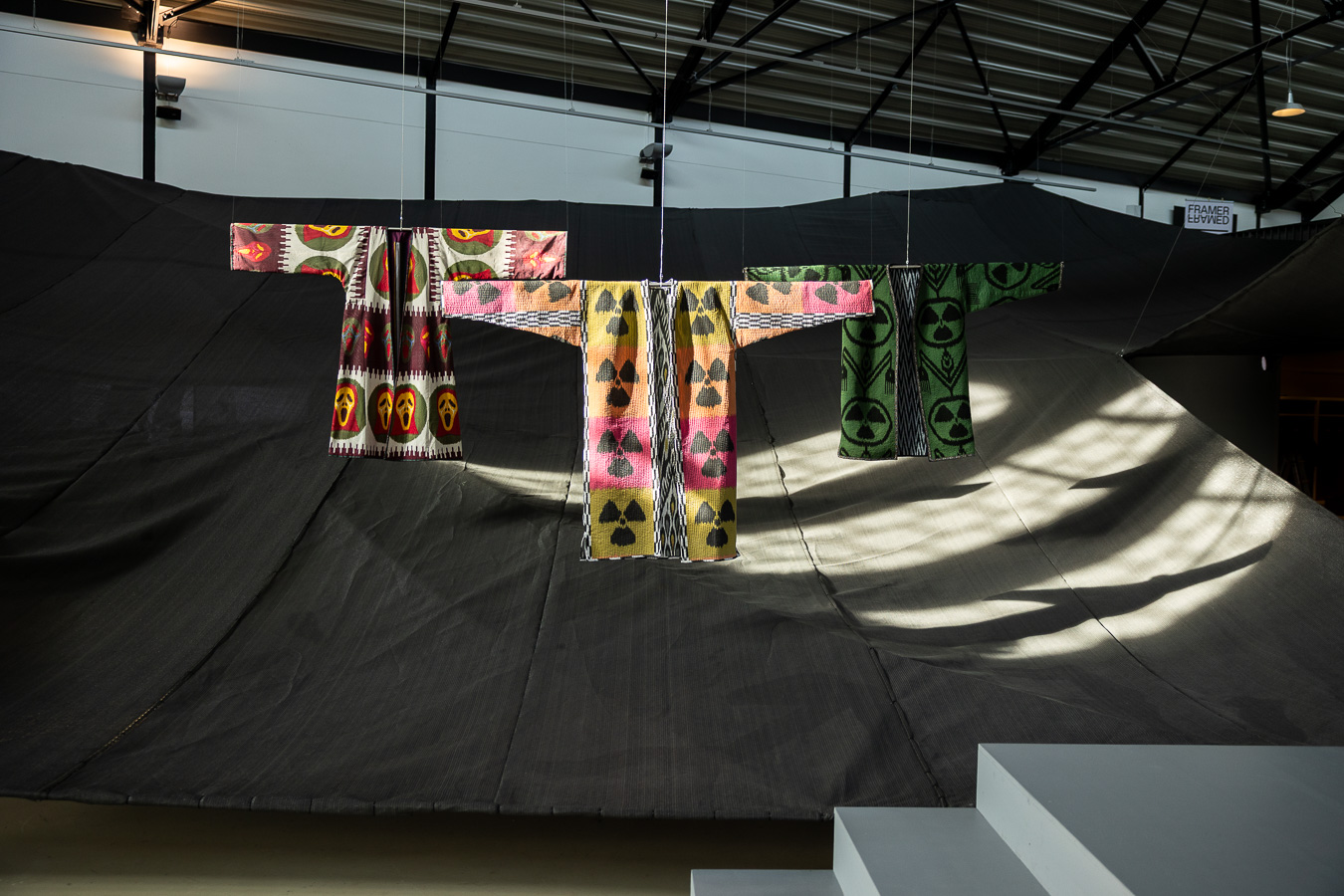
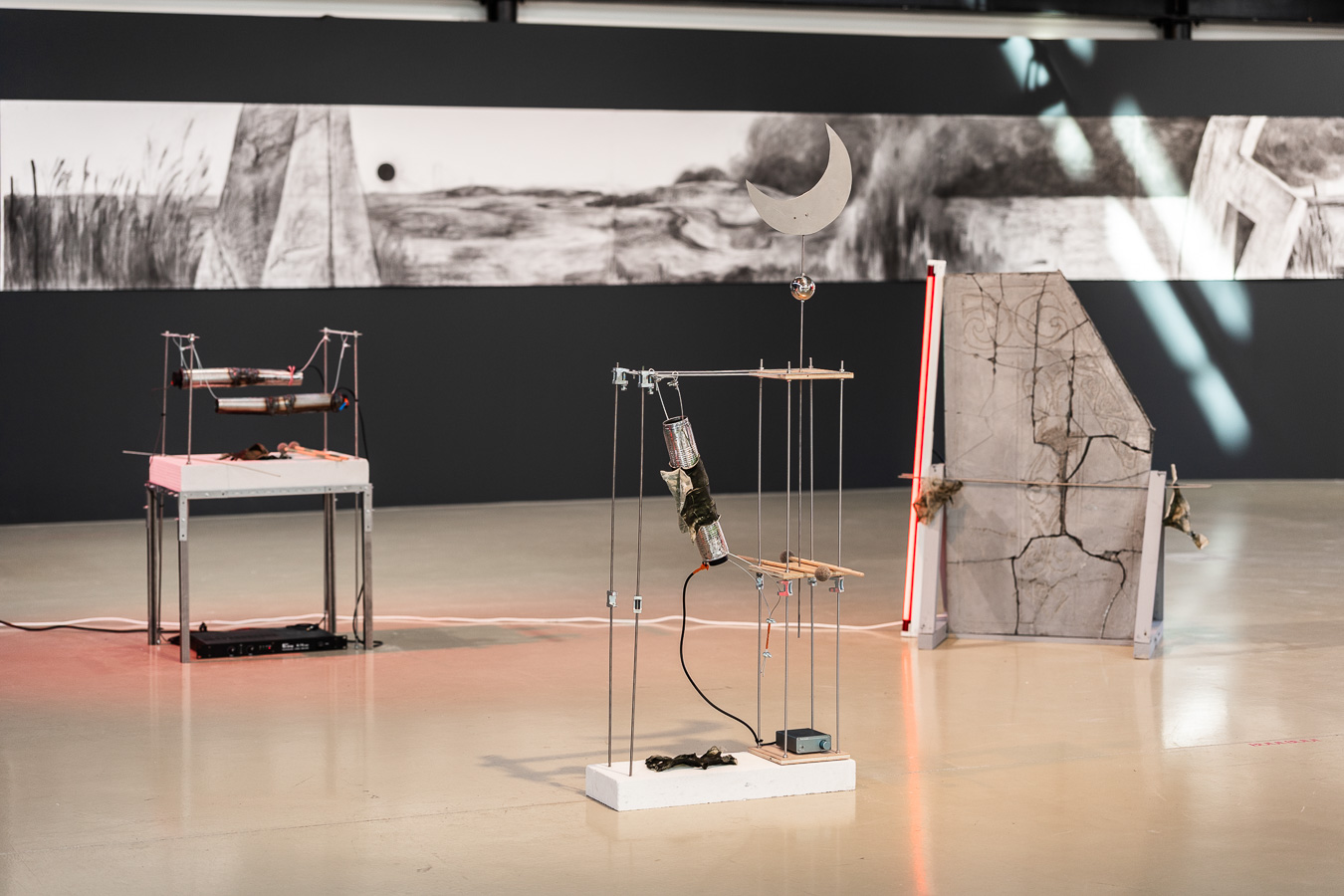
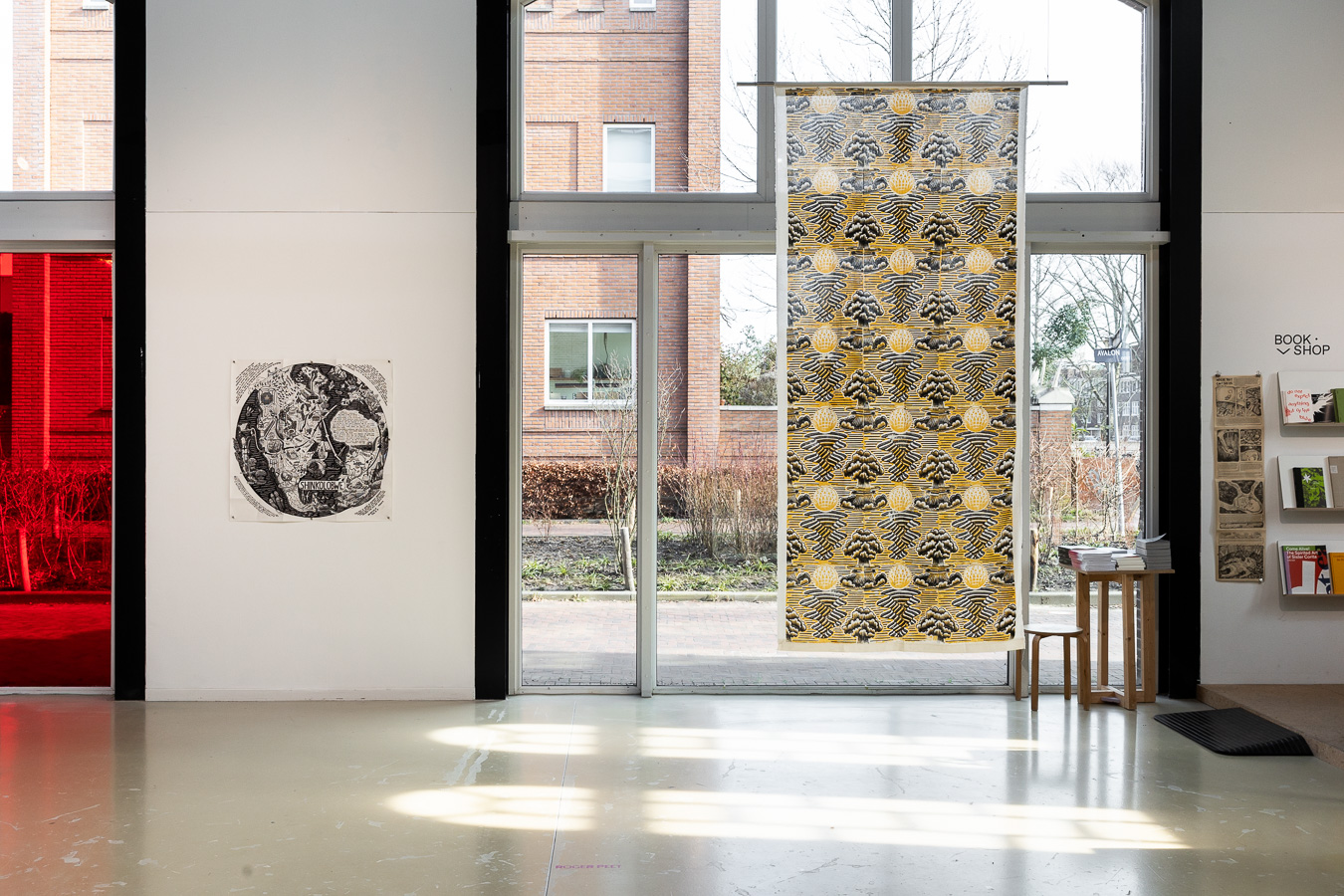
Nuclear clouds and radioactive signs loomed from the ceiling on textiles, and a monochrome landscape stretched across the adjacent wall. Nearby, a large table displayed evocative images and words of anti-nuclear resistance. Rows of black chairs welcomed visitors in to sit amidst these works, which, appearing as both warning signs and testimonials, functioned as precursors to the conversations about to be had.
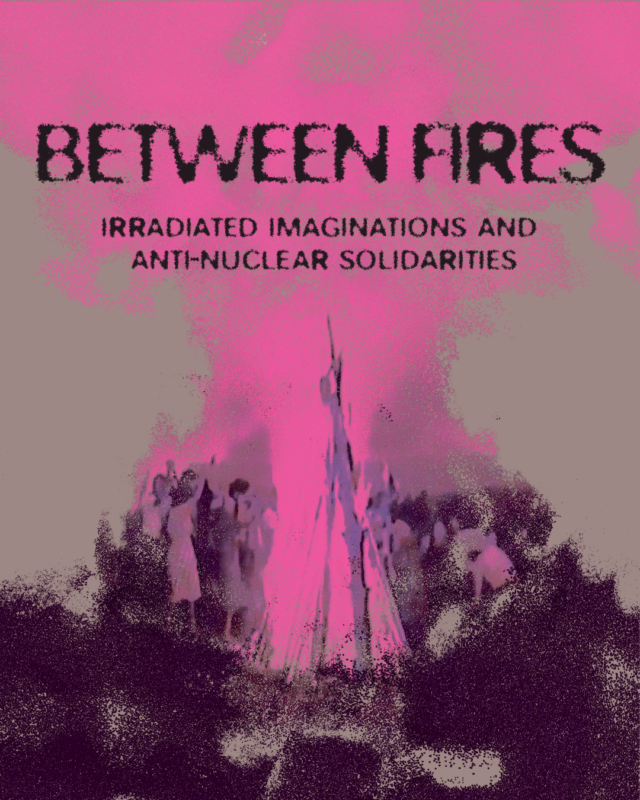
On 15 March 2026, Framer Framed hosted the public program Nuclear Histories and Protest Movements, as part of the exhibition Between Fires: Irradiated Imaginations and Anti-Nuclear Solidarities, curated by Fabienne Rachmadiev, organized in collaboration with Sonic Acts. This consisted of two main events: a roundtable conversation with Fabienne Rachmadiev, alongside artists and researchers Kamila Smagulova, Kyveli Mavrokordopoulou and Äsel Kadyrkhanova; and a performance lecture Xiren v. 0 by artist Yeon Sung. The exhibition Between Fires draws focus to occurrences of nuclear testing and its long-lasting effects, with special attention to Kazakhstan as well as international anti-nuclear movements. The event drew a full house into conversation about nuclear legacies, contested memory, social movements, and the art of resistance.
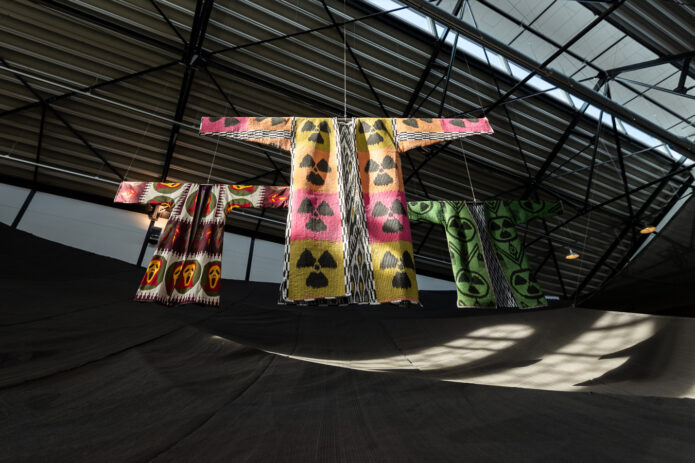
Dilyara Kaipova, Radiation Signs, as presented in the exhibition Between Fires: Irradiated Imaginations and Anti-Nuclear Solidarities (2026) at Framer Framed, Amsterdam
Seated on a small elevated stage, with black drapes and Radiation Signs, the colourful textiles by artist Dilyara Kaipova as their backdrop, curator Fabienne Rachmadiev, artist Äsel Kadyrkhanova, and researchers Kamila Smagulova and Kyveli Mavrokordopoulou introduced themselves, and connected their work to the histories of nuclear testing, resistance and art. Throughout the discussion three main topics emerged: the invisibility of nuclear radiation and its contested yet persistent absence in public discourse; the importance of testimonial stories and their impact on collective memory; and anti-nuclear movements across the globe and the role of art within them.
The Danger of Invisibility
Between 1949-1989, nuclear testing was carried out in Kazakhstan by the Soviet Union, initially in the atmosphere, and later, from 1963 onward, underground. “They thought it was safer, but it just made it invisible.” Radiation has visible and lethal effects on people and land, but in its very nature, it’s imperceptible. It haunts generations with cancer and thyroid disorders but is not adequately present in public discourse – individuals do not dare to speak about it a lot of the time, and the Kazakh government overlooks attempts to create awareness. The urgency of this topic of discussion lies in the fact that what remains unseen, or ‘invisible,’ cannot easily be recognized, and therefore cannot be done justice.
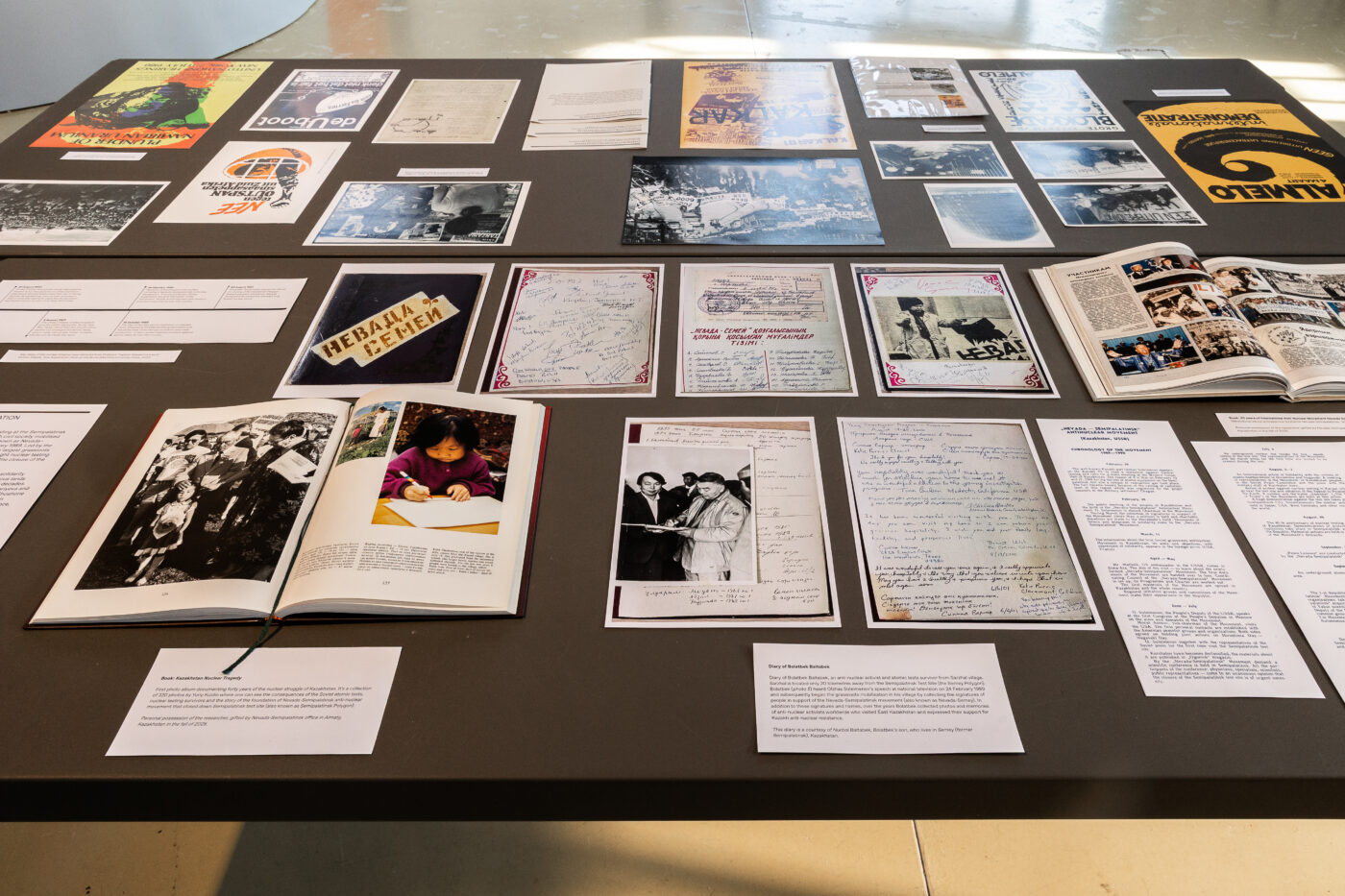
Research presentation by Mathijs Boom, Reina Borst and Rose Spijkerman of the Institute of Social History (IISG) as part of the exhibition Between Fires (2026) curated by Fabienne Rachmadiev at Framer Framed, Amsterdam. Presented in collaboration with Sonic Acts. Photo: © Maarten Nauw / Framer Framed
Landscape and Memory
Despite the silence cast over the topic of nuclear radiation, in response to a question from the audience, the speakers clarified that many Kazakhs from – and in the vicinity of – Semey, wish for their stories to be heard. The discussion underscored how crucial it is to hold onto these to more justly recount history and memory, and give shape to the generational trauma they carry. During the conversation, Äsel Kadyrkhanova shared one of her mother’s memories with the audience – of nuclear detonations rocking her besik (traditional cradle), eliciting a feeling of safety, like the hands of a trusted guardian. Interestingly, her connection to this memory, combined with the technique of her hand drawn animation – featured in the exhibition Between Fires – pushed Kadyrkhanova to think conceptually and physically explore memory and trauma through illustration: “Hand drawn animation happens through drawing and erasing, and it is precisely how memory works.”
Throughout the discussion, it became clear that stories at times also function as precious artifacts. Especially in the case of nuclear radiation and resistance in Kazakhstan, there are very few images to rely on; therefore, memory is carried through word of mouth, active listening and engagement. In this way, the audience, too, became implicated in the process of keeping it alive.
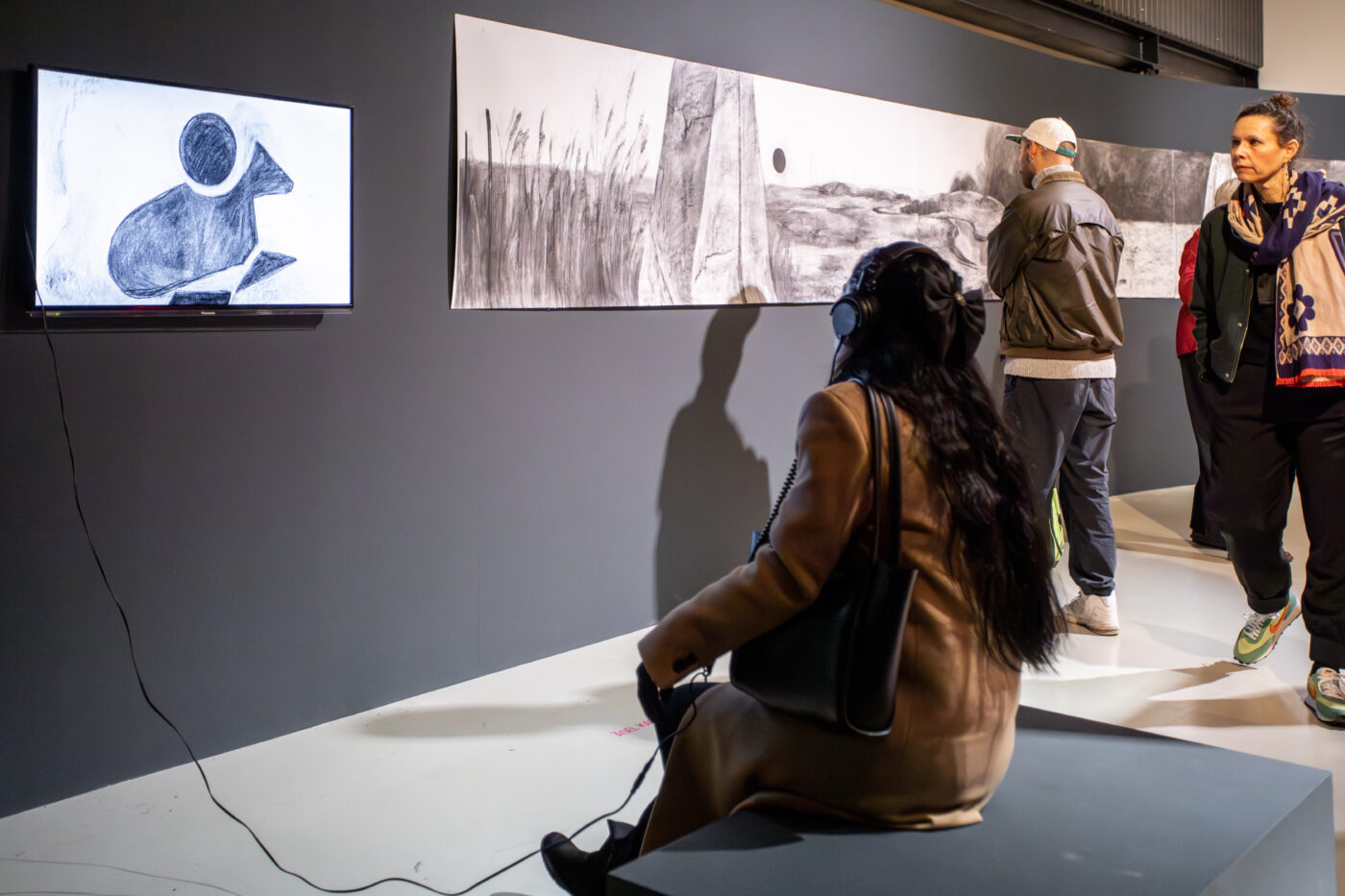
Äsel Kadyrkhanova, Nükte (2026) video and harcoal on paper, in the exhibition Between Fires: Irradiated Imaginations and Anti-Nuclear Solidarities (2026) curated by Fabienne Rachmadiev at Framer Framed, Amsterdam. Presented in collaboration with Sonic Acts. Photo: © Marlise Steeman / Framer Framed.
Art and Resistance
Adding an extra layer of dimension to this roundtable, researcher Kyveli Mavrokordopoulou shed light on female-led antinuclear movements and peace camps across Europe. Françoise d’Eaubonne, a French pioneer of ecofeminism, brought theory into direct action, reportedly including sabotage. “On 3 May 1975, she plants two bombs at the Fessenheim nuclear site, and this in fact delays the beginning of operations.”
The relevance of art within the surge of antinuclear movements in the 1970s-80s is especially evident in the women’s peace camps at Greenham Common, which persisted for nearly two decades until the planned deployment of missiles was ultimately abandoned. Within these camps, the recurring symbol of the spiderweb, woven daily by the women, carried layered meanings: it signified female labour, care and kinship, and symbolised the networks of solidarity formed as the camp drew artists and activists from irradiated regions across the globe. The softness of wool further stood in stark contrast to the rigid metal fences enclosing the military site. Artistic protest practices also emerged in Kazakhstan, where student activists staged embodied performances by covering themselves in white cloth and lying motionless to evoke nuclear death. Yet, as with many accounts of nuclear and anti/nuclear activity in Kazakhstan, visual documentation remains scarce, raising broader questions about how other antinuclear movements, and the art they displayed, have been archived.
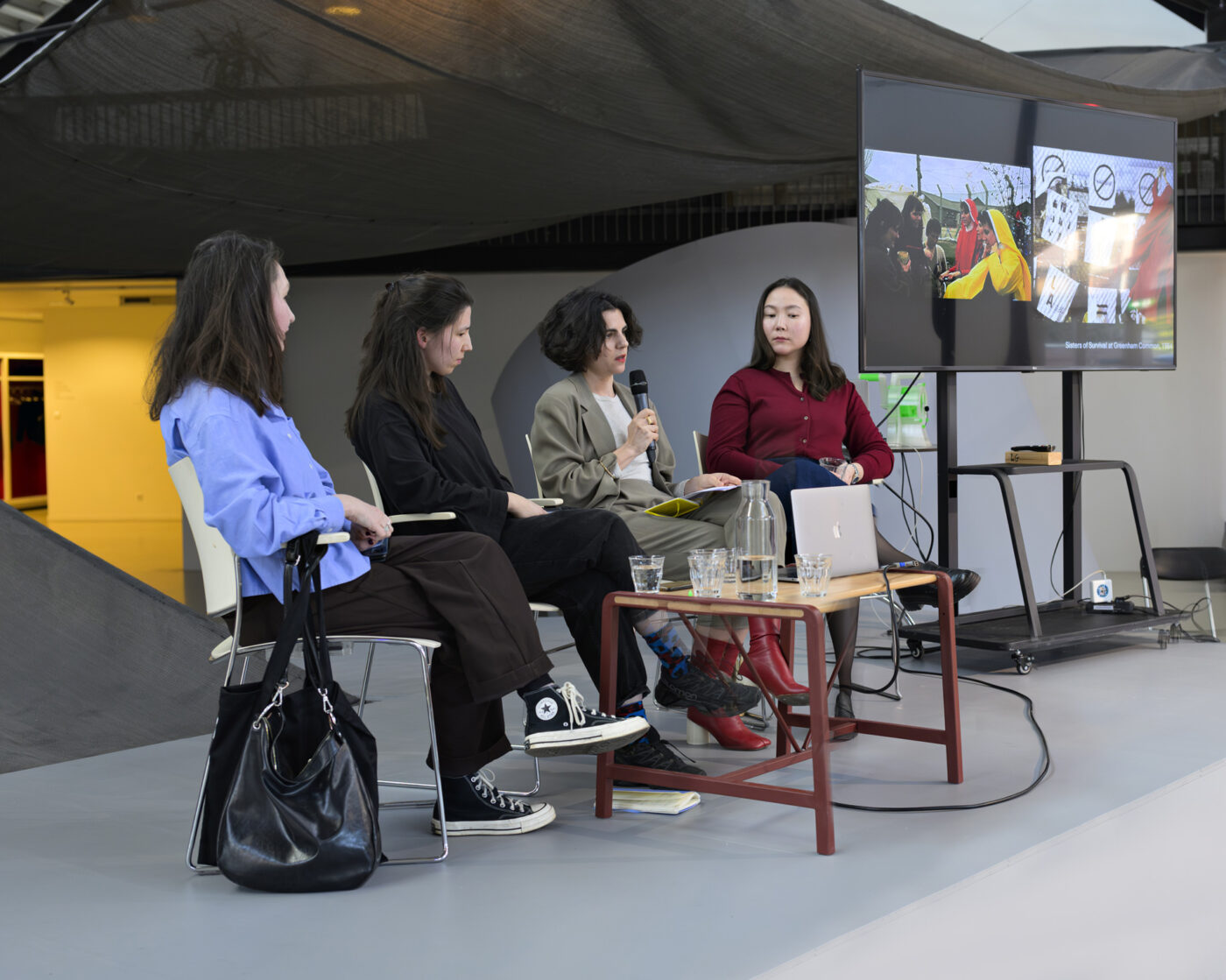
Panel discussion Nuclear Histories & Protest Movements (2026) at Framer Framed, Amsterdam. Photo: © Pieter Kers / Framer Framed
Performance lecture Xiren v.0
As a powerful follow-up to the roundtable conversation, artist Yeon Sung’s lecture-performance sounded an alarm on a very current phenomenon that remains largely absent from public discourse: radioactive Saharan dust, a result of nuclear testing, circulating across North Africa and into Europe. While air quality warnings were issued across Europe, advising citizens to stay indoors, it was rarely explained why – Yeon Sung did, through satellite imagery, evocative videos, a thought-provoking monologue, and finally, the hand-crafted mechanical siren Xiren v.0.
Very sensorial in nature, the performance began with the sound of shifting sand and the rhythmic inhalation and exhalation of lungs. The audience was guided to breathe in and out, reminiscent of meditation exercises where one’s breath follows the expansion and contraction of a circle on screen. “Breathe in, breathe out. […] Skin, membrane, alveoli, blood – I cross all of it.” Yeon Sung’s words made breathing suddenly feel charged – inescapable and dangerous; evoking the unsettling possibility that radioactive dust may already circulate in our bodies.
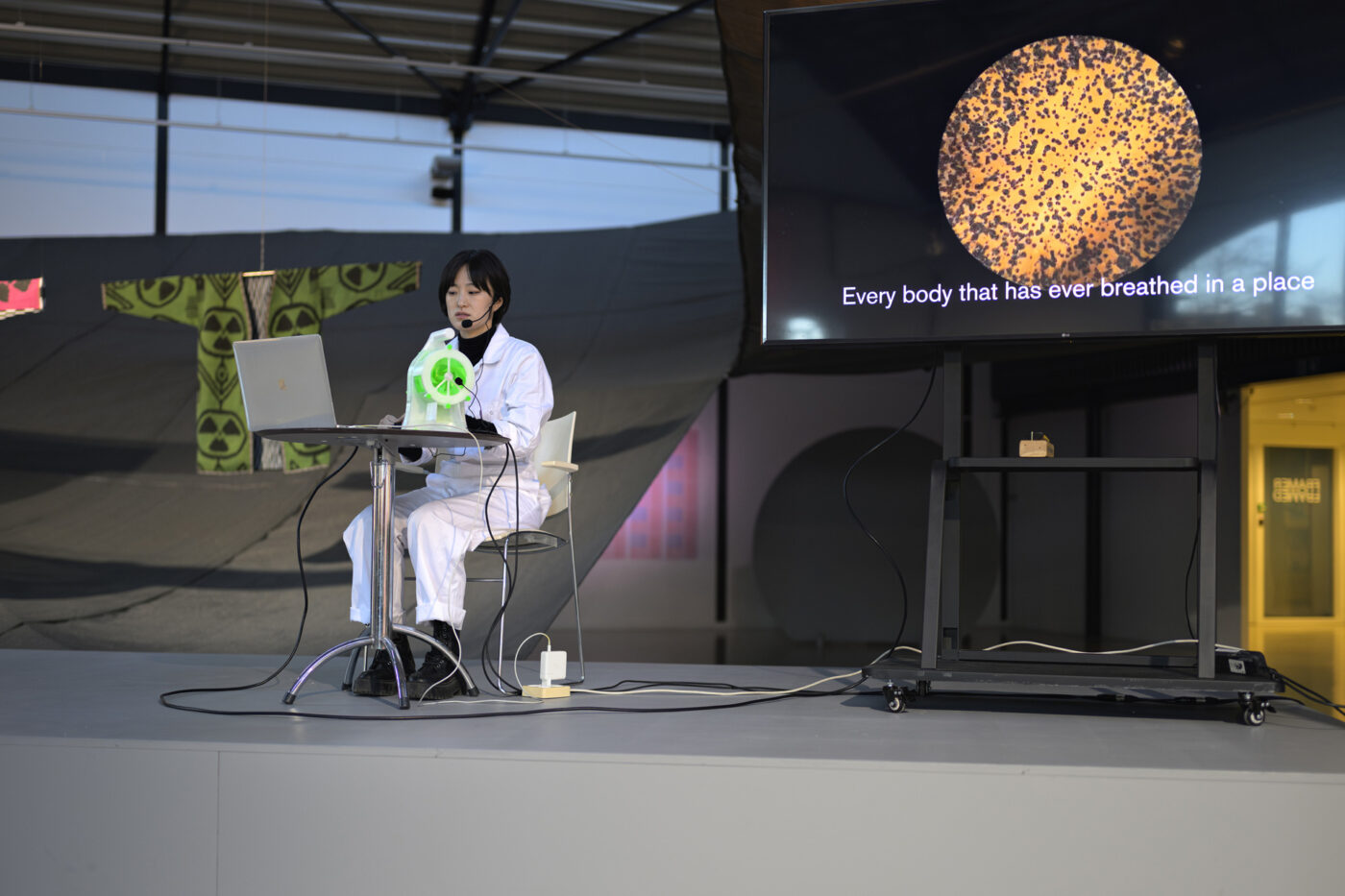
Performance lecture Xiren v.0. by Yeon Sung during the event Nuclear Histories & Protest Movements (2026) at Framer Framed, Amsterdam. Photo: © Pieter Kers / Framer Framed
Throughout the performance, Sung made a deliberate effort to situate this as a European phenomenon, effectively dismantling the myth that environmental and humanitarian disasters happen elsewhere. Satellite imagery traced contamination, while audio recording captured the anti-nuclear protests in La Hague, France. The cry “Haro!” resounded in the audio – the name of an event which brought together activists and protestors, named after a Norman legal call against oppression. By referencing the pushback against France’s scheme involving the Orano nuclear reprocessing plant, Sung’s work resonated with the concerns mentioned for the duration of the program at Framer Framed.
Her green hand-cranked alarm helped sound the importance of spreading awareness through events and exhibitions like these. Upon exiting Framer Framed, visitors might have left with the following impressions: an awareness of the proximity of nuclear realities; familiarity with cross-border antinuclear movements that succeeded, like Nevada-Semey and Greenham Common; and an understanding of art’s role – not merely as representation, but as an active, collective form of resistance.
Extractivisme / Action Research / Ecologie / Kunst en Activisme / Performance /
Exposities